
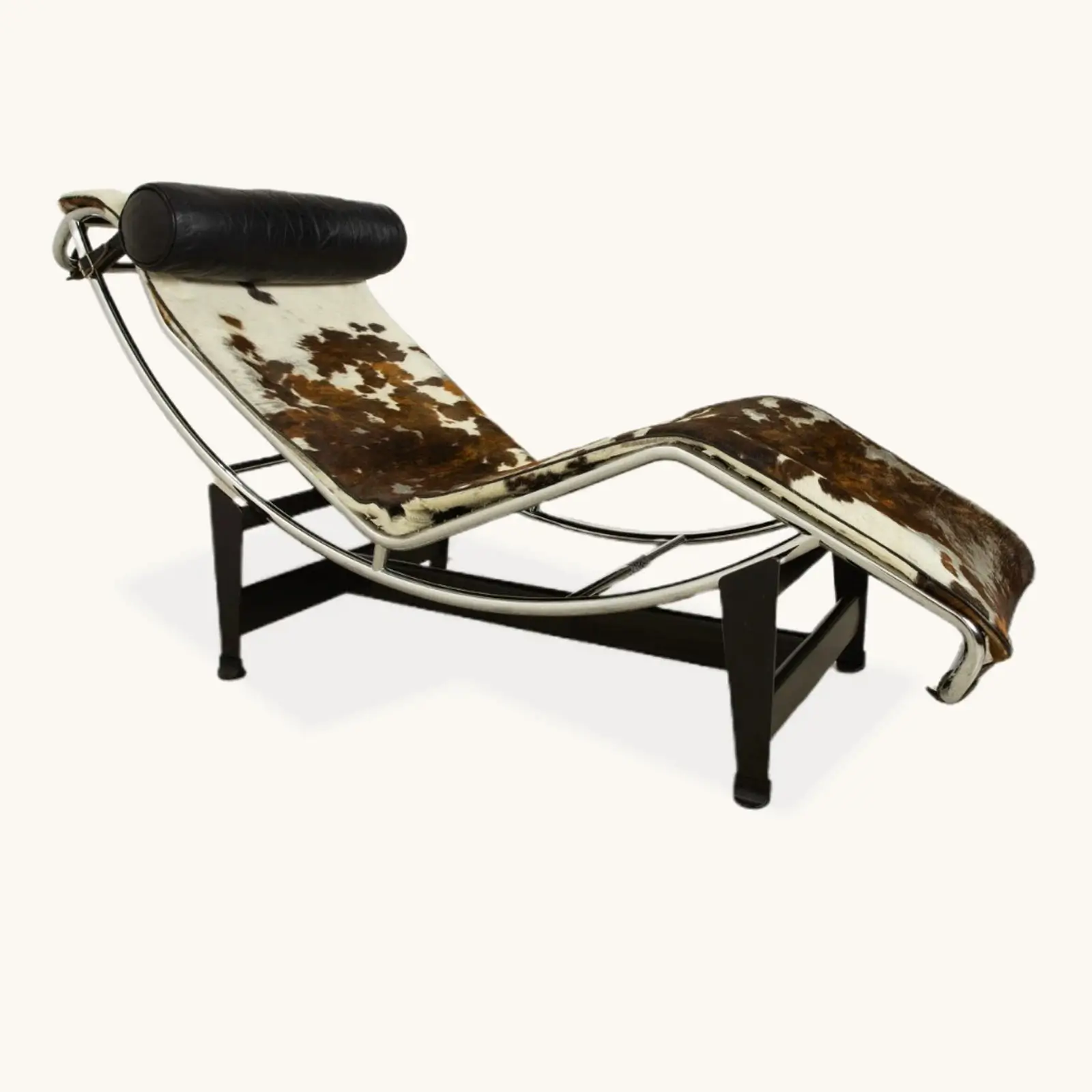
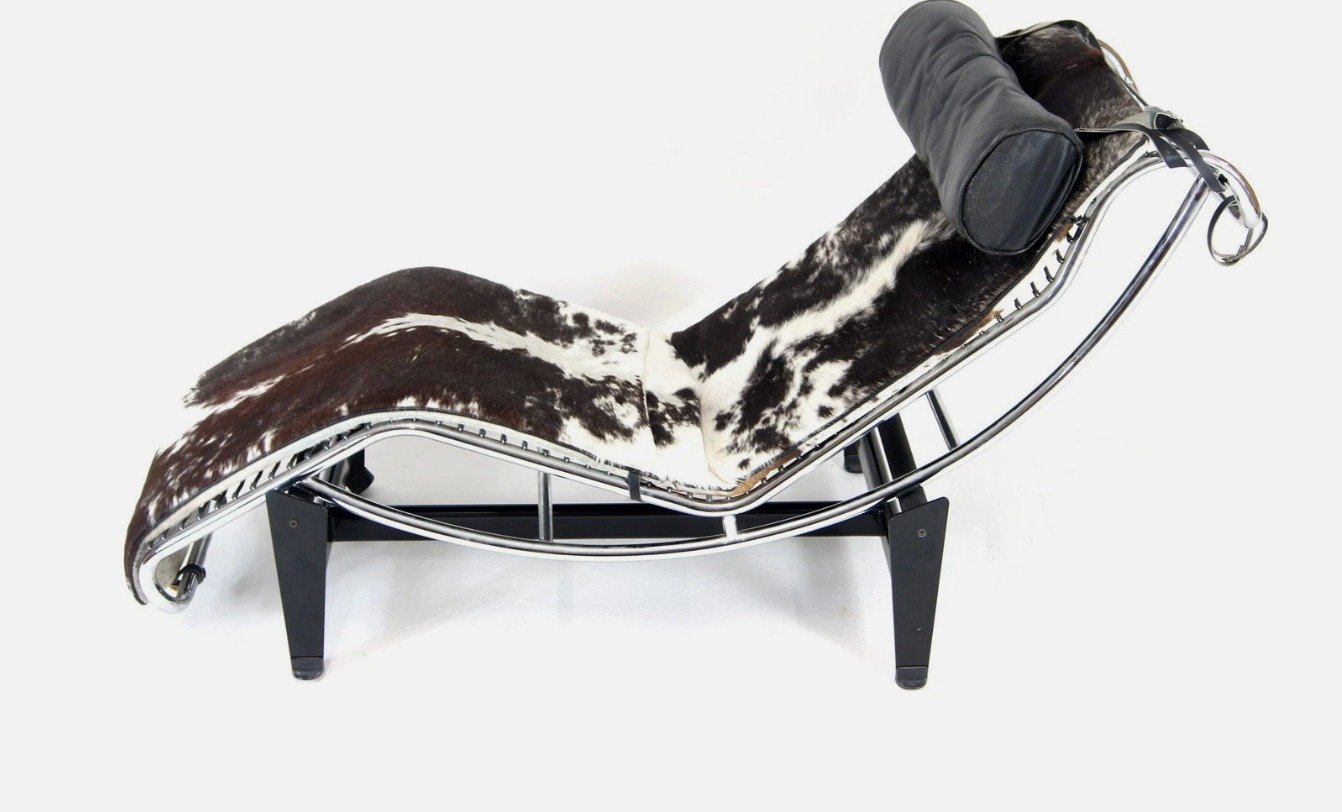
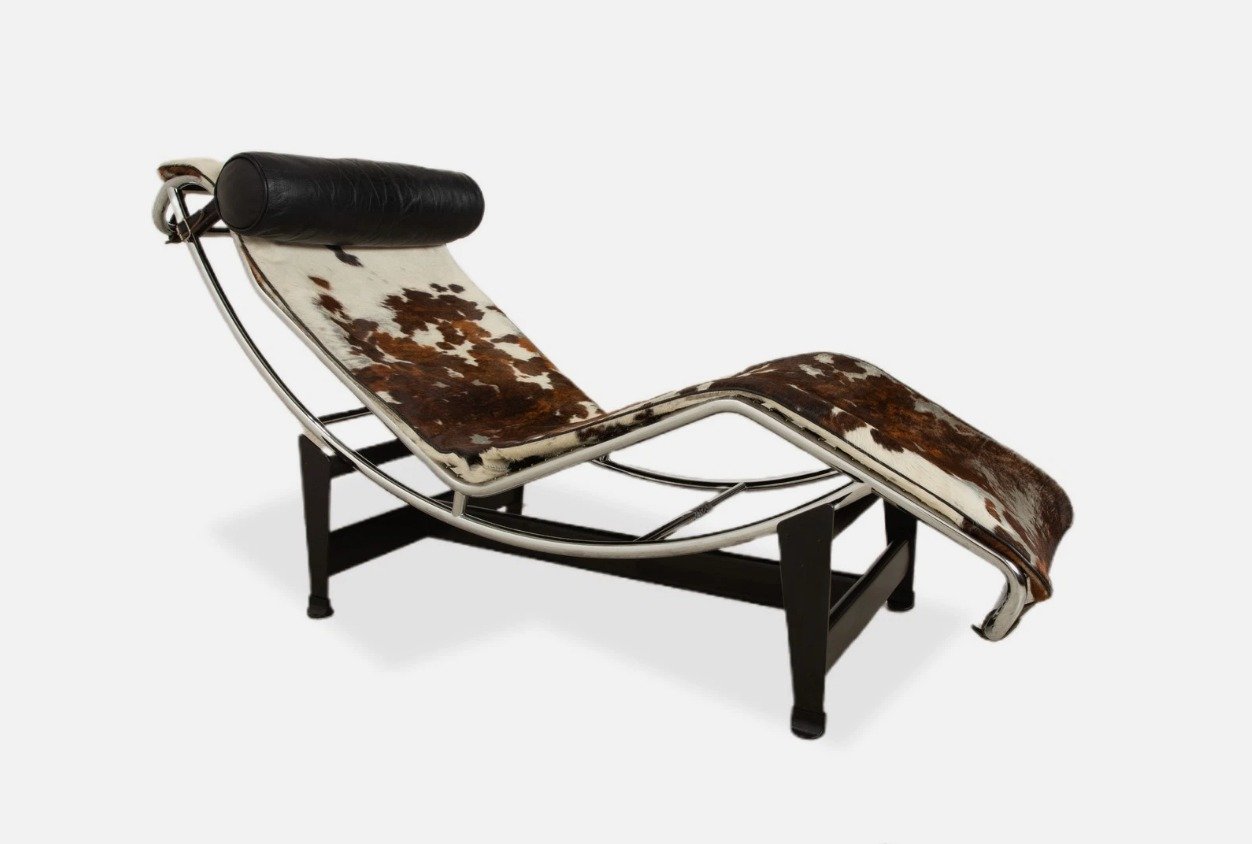
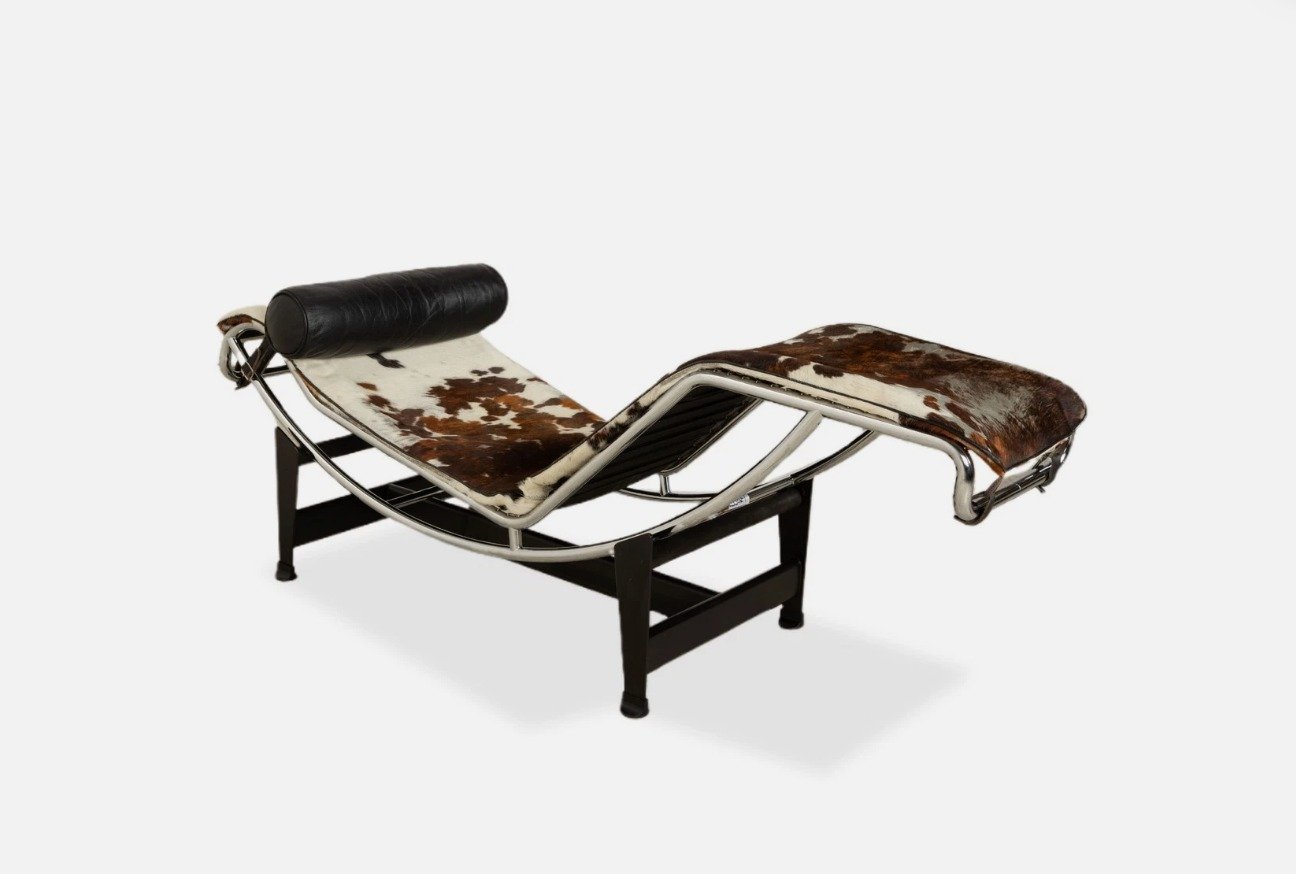
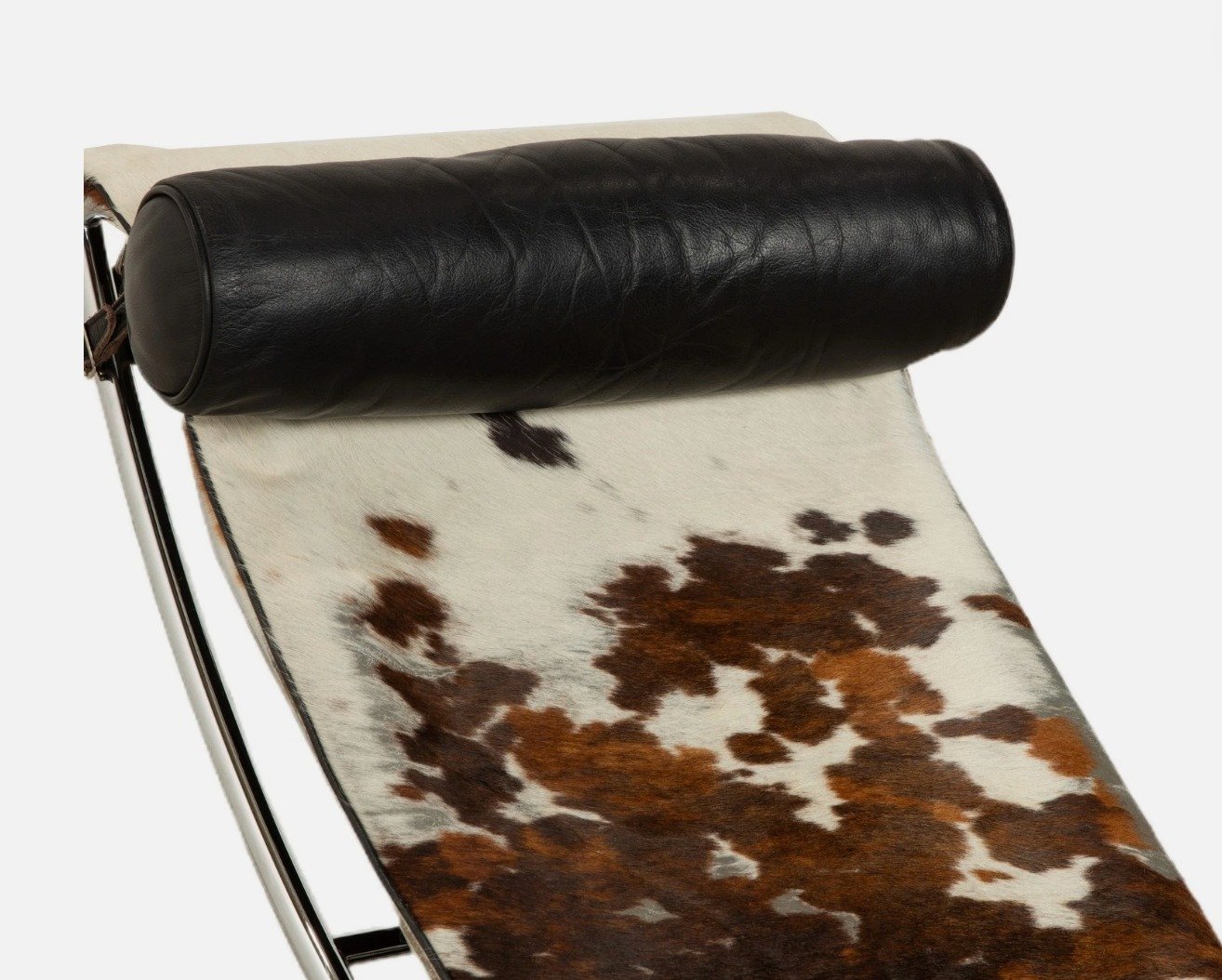
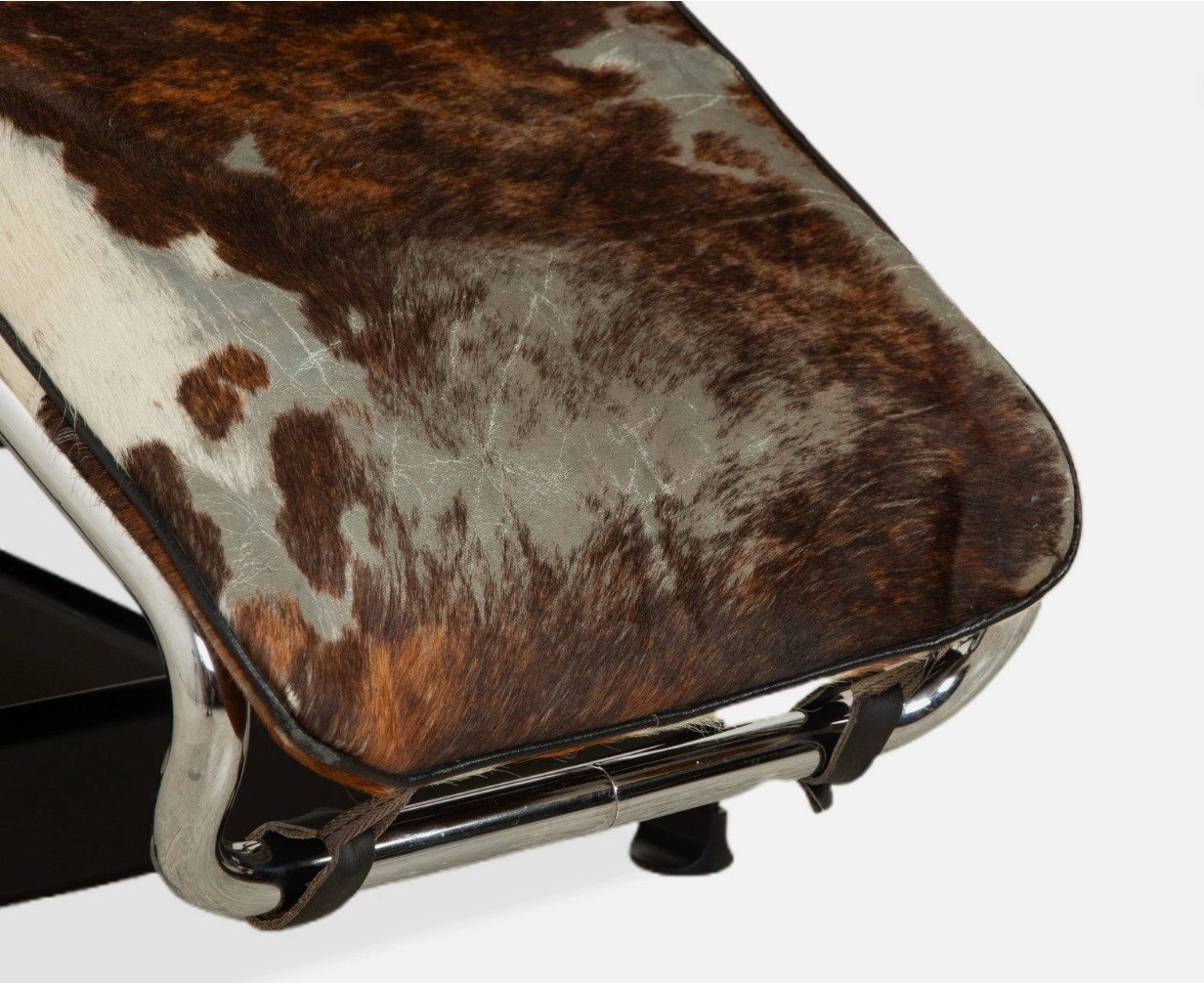
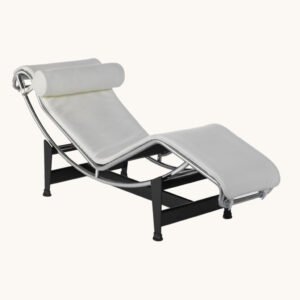
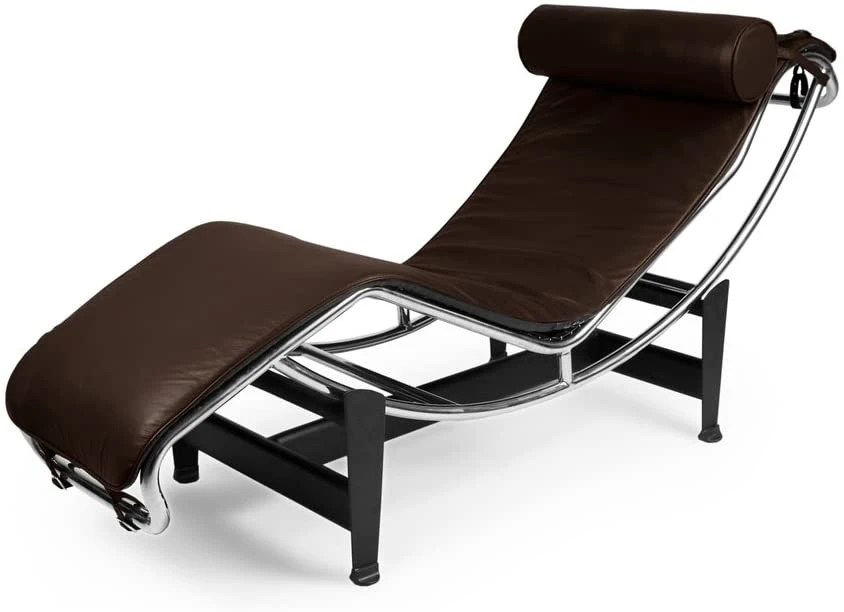
Our LC4 pony skin chaise longue replica pairs a brown and white hair-on hide with a black leather headroll, a polished chrome bow and a matt black base. The shape is the same 1928 design as the rest of our LC4 range. What changes is the cover: short, soft hair with patches of brown, rust and white, so no two chairs look quite the same.
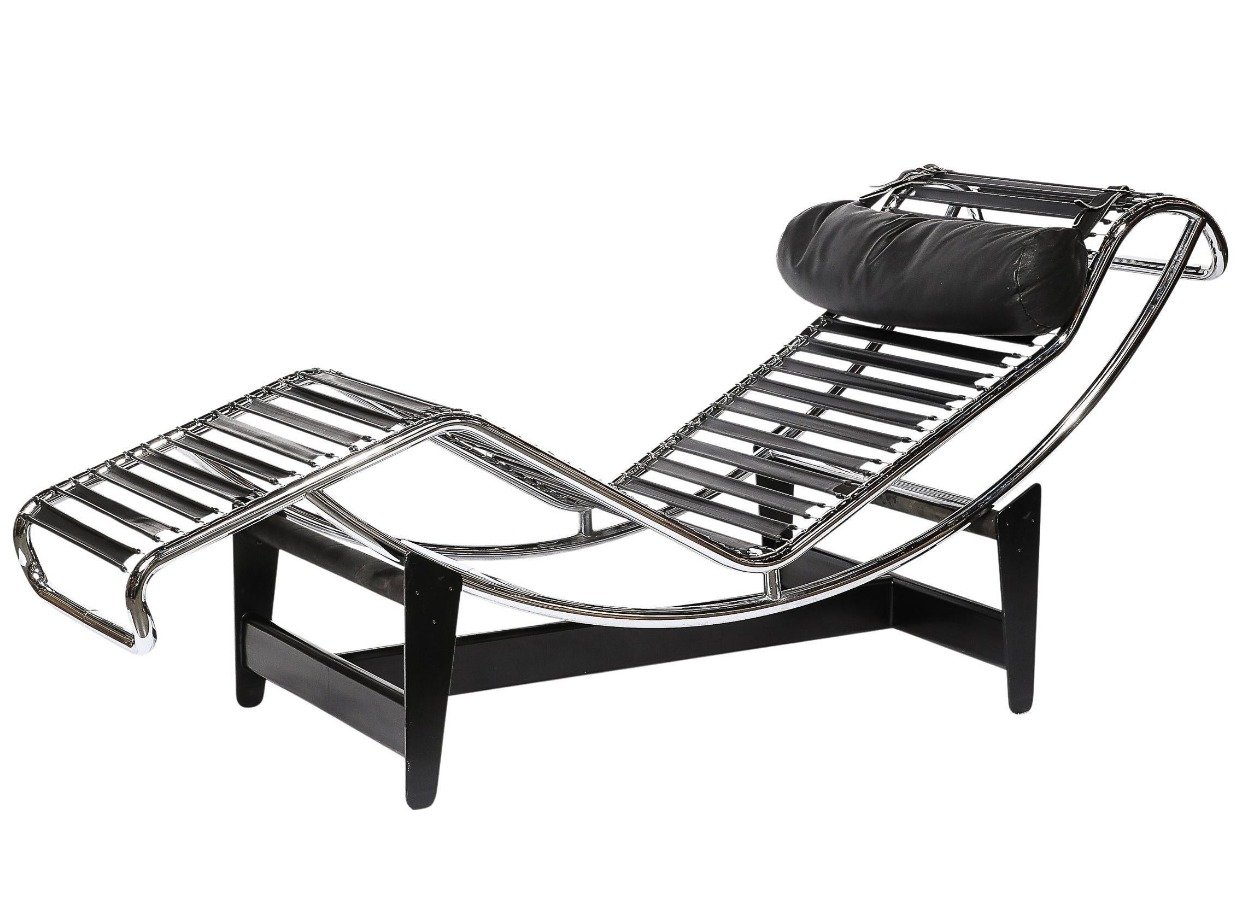
Choose it when you want the chaise to be the first thing people notice in a room. If you would rather have a quieter piece, our black, chocolate brown and white versions use smooth leather instead.
LC4 Pony Skin at a Glance
- Hair-on hide cover: the hair stays on the skin, so the cradle feels soft and shows a natural pattern. Every chaise is one of a kind.
- Brown, rust and white patches: a mixed pattern hides small marks and dust better than one flat colour, which helps on a piece you use every day.
- Black leather headroll: a smooth, padded roll under your neck, held by a leather strap. Its black matches the base, so the hide stays the focus.
- Slide-to-set angle: the chrome bow rests loose on the base. Move it forward to sit up or back to lie down, with no levers or springs.
- Two-part build: the cradle lifts off the base, so two people can carry it through doors and up stairs in pieces.
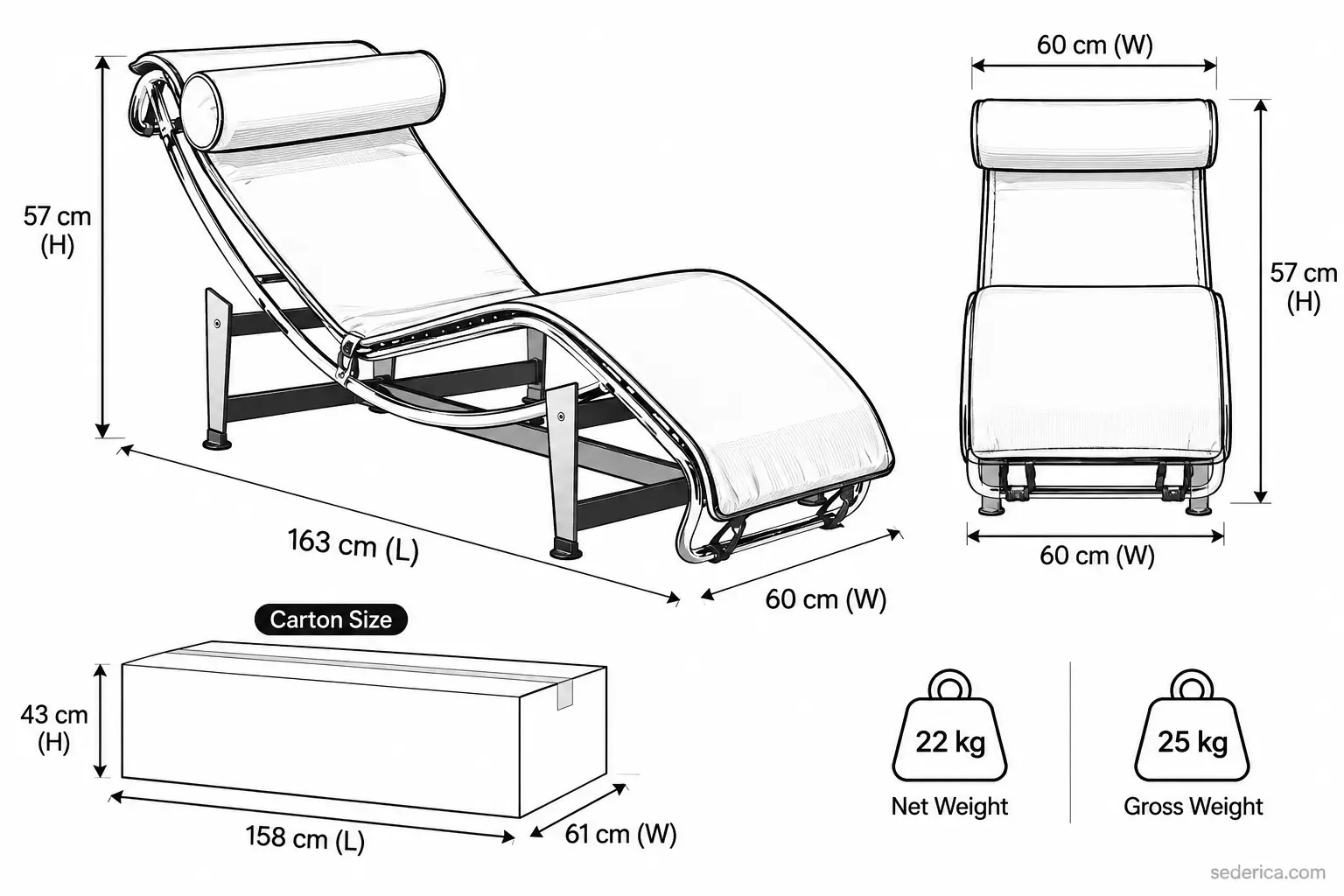
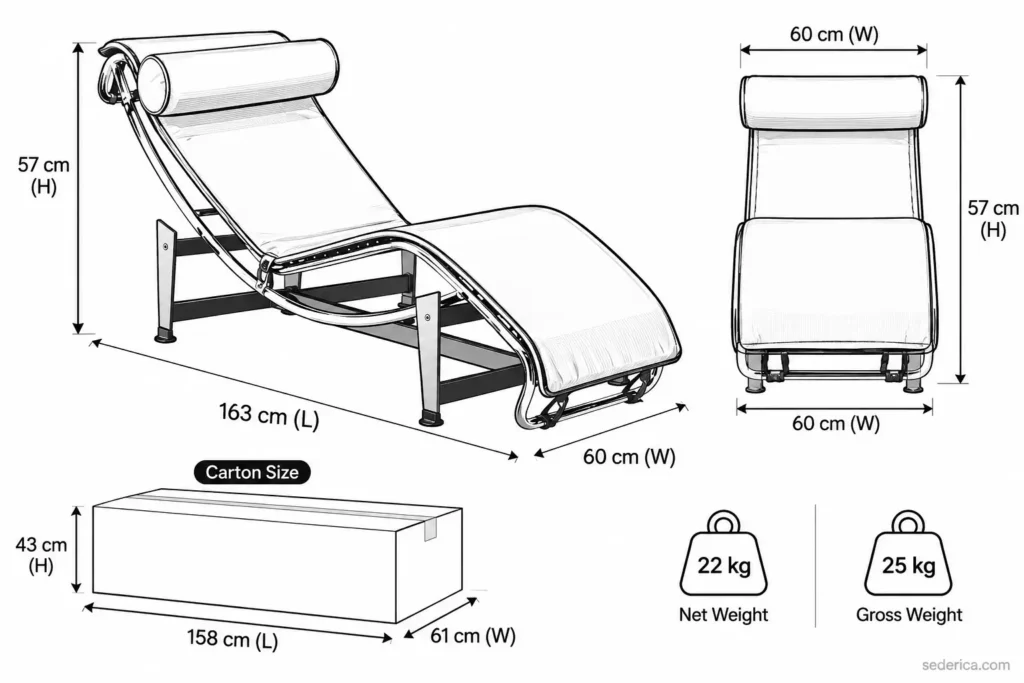
- Size and weight: 163 × 60 × 57 cm and 22 kg.
Why Choose the Le Corbusier LC4 Pony Version?
On our leather LC4s, the cover is plain so the curve of the chrome bow does the talking. The pony version turns that around. Here the hide is the main feature, and the bow frames it like a picture.
How Hair-On Hide Feels Next to Smooth Leather
Stroke the hide from head to foot and the hair lies flat and feels soft, a bit like a short-haired dog. Stroke it the other way and it feels slightly rough. Smooth leather has no direction and feels cool and even.
The hide is matt, so it does not shine under lamps the way leather does. It also hides creases. Leather shows the lines where you sit, while hair lies over them.
Rooms Where It Works
- Living room centrepiece: plain walls, a plain rug and one bold piece.
- Studio or home office: somewhere to stretch out between tasks that does not look like a sofa.
- Collector’s room: next to other modernist pieces in steel and glass. Our Eileen Gray E1027 side table, also chrome and from the late 1920s, sits well beside it.
Keep other strong patterns away from it, such as busy rugs or animal-print cushions.
LC4 Cowhide Materials: What the Chaise Is Made Of
The cover is hair-on cowhide, the material most sellers call pony skin. It is fitted over a padded cushion on the cradle, so you lie on soft hair rather than a thin layer of hide.
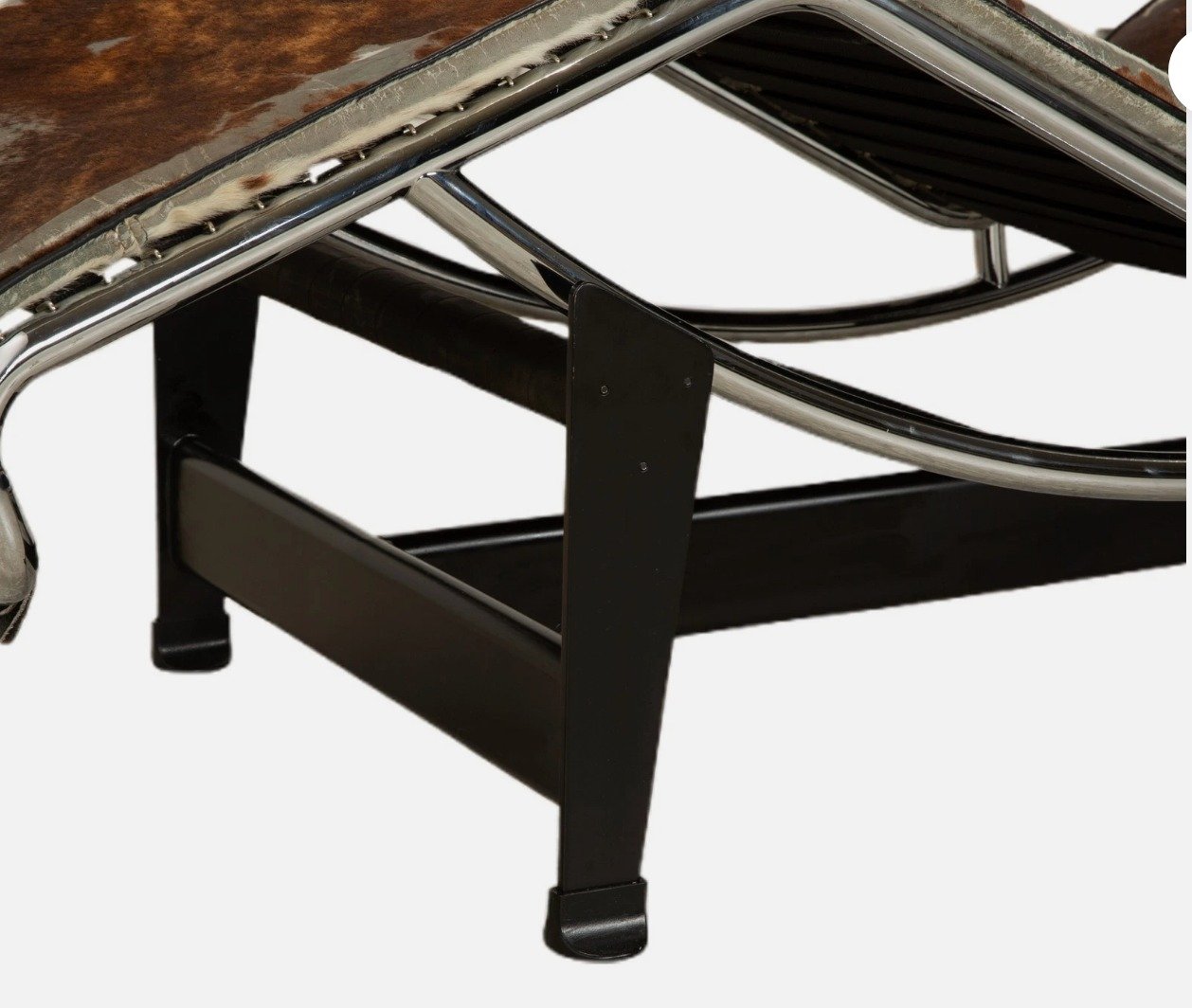
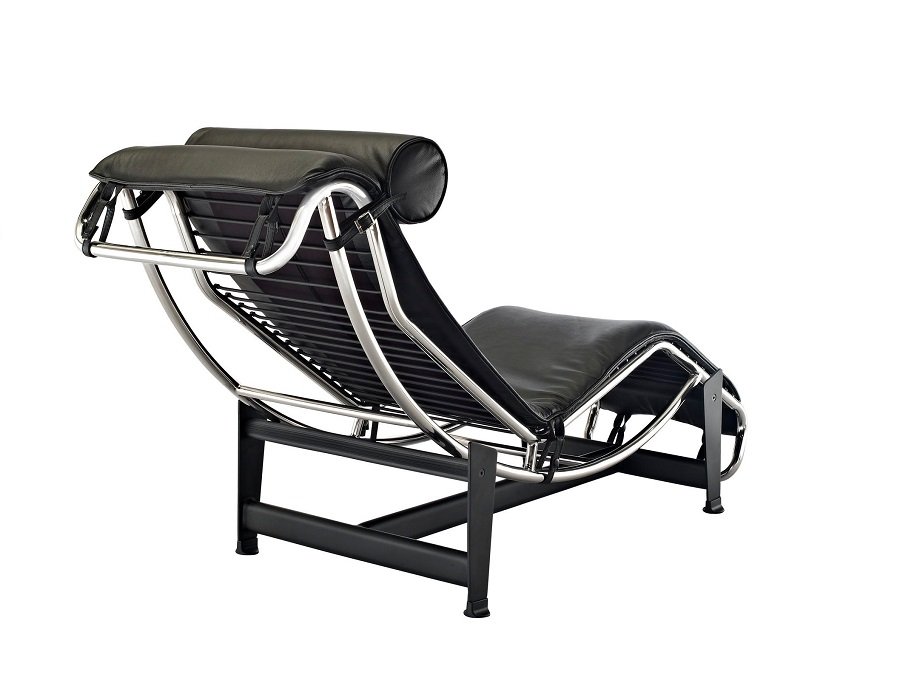
Under the cushion is one long bow of chrome-finish steel tube. That bow is the only part that touches the base. The base itself is matt black powder-coated steel on four short legs, and the bow rests across its two crossbars.
The headroll is black leather and hangs from a leather strap at the head end, so your neck rests on a smooth surface.
Why Is It Called Pony Skin?
The name comes from the furniture trade, not from the animal on most chairs today. French auction houses still describe these covers as poulain, meaning foal, and Italian shops use cavallino, meaning little horse. The hide on our chaise comes from cattle. We say so plainly, because you should know exactly what you are buying.
Hair-On Hide in the LC4 Story
Le Corbusier, Pierre Jeanneret and Charlotte Perriand designed the chaise in 1928, and it was shown at the Salon d’Automne in Paris in 1929. Hide covers were part of the plan from the start. In her memoir Une vie de création (1998), Perriand recalls choosing foal skins and calfskins from skin dealers for the tilting armchair and the chaise, alongside canvas and plain leather.
The V&A in London keeps a 1965-made example with a pony skin seat and a separate black leather head pad, much like ours. You can see the V&A museum record, read about the architect on our Le Corbusier designer page, or follow the full LC4 history.
LC4 Chaise Longue Pony Skin Replica Specifications
| Specification | Details |
|---|---|
| Product | Le Corbusier LC4 Pony Skin Chaise Longue Replica |
| Design reference | LC4 design by Le Corbusier, Pierre Jeanneret and Charlotte Perriand, 1928 |
| Cover | Hair-on cowhide, sold as “pony skin” |
| Pattern | Brown, rust and white patches; every hide is different |
| Headroll | Black leather, padded, held by a leather strap |
| Bow frame | Chrome-finish steel tube |
| Base | Matt black powder-coated steel, four legs |
| Angle | Set by sliding the bow along the base; no levers or springs |
| Status | Le Corbusier-style replica made for Sederica |
Sederica’s LE Corbusier LC4 Dimensions
| FEATURE | CHAIR |
|---|---|
| Overall width | 60 cm |
| Overall depth | 163 cm |
| Overall height | 57 cm |
| Weight | 22 kg |
| Box | 158 × 61 × 43 cm, 25 kg |
Is the Pony Hide LC4 Right for Your Home?
A good fit if you:
- want one bold piece in an otherwise plain room
- like natural texture and are happy that your chaise will differ a little from the photos
- often lie down in shorts or bare legs, since hair does not stick to skin on warm days
- collect modernist furniture and want the hide finish Perriand chose in the late 1920s
Consider another version if you:
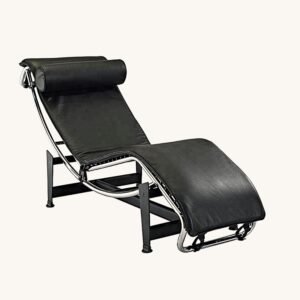
- want a sharp, graphic outline: our LC4 in black leather suits that better
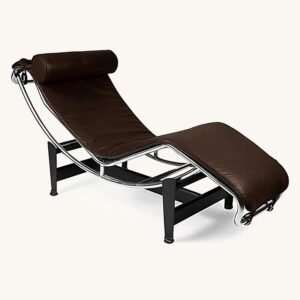
- want something warm, smooth and quick to wipe: try the chocolate brown LC4
- want the chaise to blend into a pale, minimal room: look at our white LC4
- share your home with a cat or dog that sleeps on furniture: pet hair works into the hide and takes longer to brush out than off smooth leather, and claws can pull hair loose
- want no animal hide at all: every LC4 in our range is covered in hide or leather
Pony Hide vs Our Leather LC4 Versions
| Pony skin (this chaise) | Black | Chocolate brown | White | |
|---|---|---|---|---|
| Surface | Short, soft hair, matt | Smooth leather | Smooth leather | Smooth leather |
| In the room | The cover is the feature | Sharp outline against pale walls | Warm and calm | Light, blends into pale rooms |
| Small marks and dust | Pattern hides them | Pale dust shows | Hides daily marks well | Shows marks and denim dye |
| On bare skin | Soft, does not stick | Cool and smooth | Cool and smooth | Cool and smooth |
| Everyday care | Brush with the hair, no creams | Wipe, condition now and then | Wipe, condition now and then | Wipe often, condition now and then |
| Best in | Plain rooms that need one bold piece | Monochrome, grey or concrete rooms | Wood floors and warm colours | Bright, minimal rooms |
All four share the same chrome bow, black base and 163 × 60 × 57 cm size. Only the cover changes, so choose by the room and by how much care you want to give.
Caring for a Pony Hair Chaise Lounge
- Brush weekly with a soft clothes brush, always in the direction the hair lies, from head to foot.
- For crumbs and dust, use the soft brush tool of your vacuum on low suction, moving with the hair.
- Never soak the hide. Water that reaches the skin under the hair can leave it stiff or shrunken.
- Skip leather conditioners and creams on the hair. They clump it and leave a greasy patch. The black headroll is the only part that may need a colourless leather cream.
- Keep the chaise out of strong, direct sun. The brown and rust patches fade first, and fading cannot be undone.
- Keep shoes off the foot end. Heels rub the hair flat faster than anything else.
- Fingerprints on the chrome come off with a dry microfibre cloth.
LC4 Pony Hair: Questions Before You Buy
Is this real pony skin or cowhide?
It is cowhide with the hair left on. “Pony skin” is a trade name for this kind of cover, and it goes back to the 1920s, when Perriand did use foal skins. Today even the rights holder’s own retailers list this finish as cowhide. We keep the old name because it is the one people search for, and we explain it so nobody is misled.
Will my hide look exactly like the photos?
Not exactly. Every hide grows its own pattern, so the size and position of the brown, rust and white patches change from one chaise to the next. The colour family and the black headroll stay the same. If the pattern must match a room plan exactly, one of our smooth leather versions is the safer choice.
Does the hair wear or shed with use?
A few loose hairs in the first weeks are normal, and a soft brush lifts them. Over years of use, the hair can flatten or thin where you rest most, usually the seat and where your heels go. Brushing with the hair and keeping shoes off slows this down a lot.
Is a hair-on hide warmer or cooler to lie on than leather?
It feels warmer at first touch. The short hair holds a thin layer of air, so it does not feel cold on a winter evening the way bare leather can. On hot days it does not stick to your legs either. Smooth leather feels cooler for the first few minutes, then warms up to your body.
What should I do if I spill something on it?
Blot it straight away with a dry, white cloth, pressing rather than rubbing. Then dab with a cloth that is only just damp, working with the hair, and let it dry at room temperature, never with a hairdryer. Once dry, brush the hair back into line.
For oil, red wine or ink that will not lift, ask an upholstery cleaner who works with hair-on hides. Household sprays and stain removers can bleach the brown patches.
This is a Le Corbusier-style replica made for Sederica. It has no connection with the designers’ estates or any rights holder. See our Legal Disclaimer for terms, or browse our full LC4 range.


Reviews
There are no reviews yet.