TL;DR
- The Barcelona chair is so popular because Mies van der Rohe and Lilly Reich designed it in 1929 as seating for Spain’s king and queen, and its steel X-frame still looks modern.
- Only two chairs were made for the German Pavilion, yet the design has been produced almost every year since (MoMA, 2004).
- Knoll has held the production rights since 1953, and the chair furnished New York’s Seagram Building from 1958.
- A new Knoll Barcelona chair is listed from €8,496 in Germany (smow, 2026), so honest replicas sell widely.
Why is the Barcelona chair so popular almost a century after it was designed? Because it pairs a royal backstory with a shape that has never dated. Below are the four reasons, with dates, plus the chair’s limits and how to own the look for less.
Why Is the Barcelona Chair So Popular? The Four Reasons at a Glance
What makes the Barcelona chair iconic is four things working together: a royal story, a simple shape, a famous maker and a corporate setting. Each one has a real date and place behind it.
| Reason | The fact behind it | What it means today |
|---|---|---|
| Royal origin | Designed in 1929 for the Spanish royal visit to the German Pavilion in Barcelona | It looks formal in any room. |
| Timeless silhouette | Two crossing steel curves on each side, based on ancient folding stools | No detail ties it to one decade. |
| Mid-century revival | Knoll production rights and a MoMA collection place, both from 1953 | It moved from one pavilion into homes and offices. |
| Executive office staple | Seagram Building, New York, from 1958 | It still signals a serious, successful space. |
How Did a Royal Visit Make the Barcelona Chair Famous?
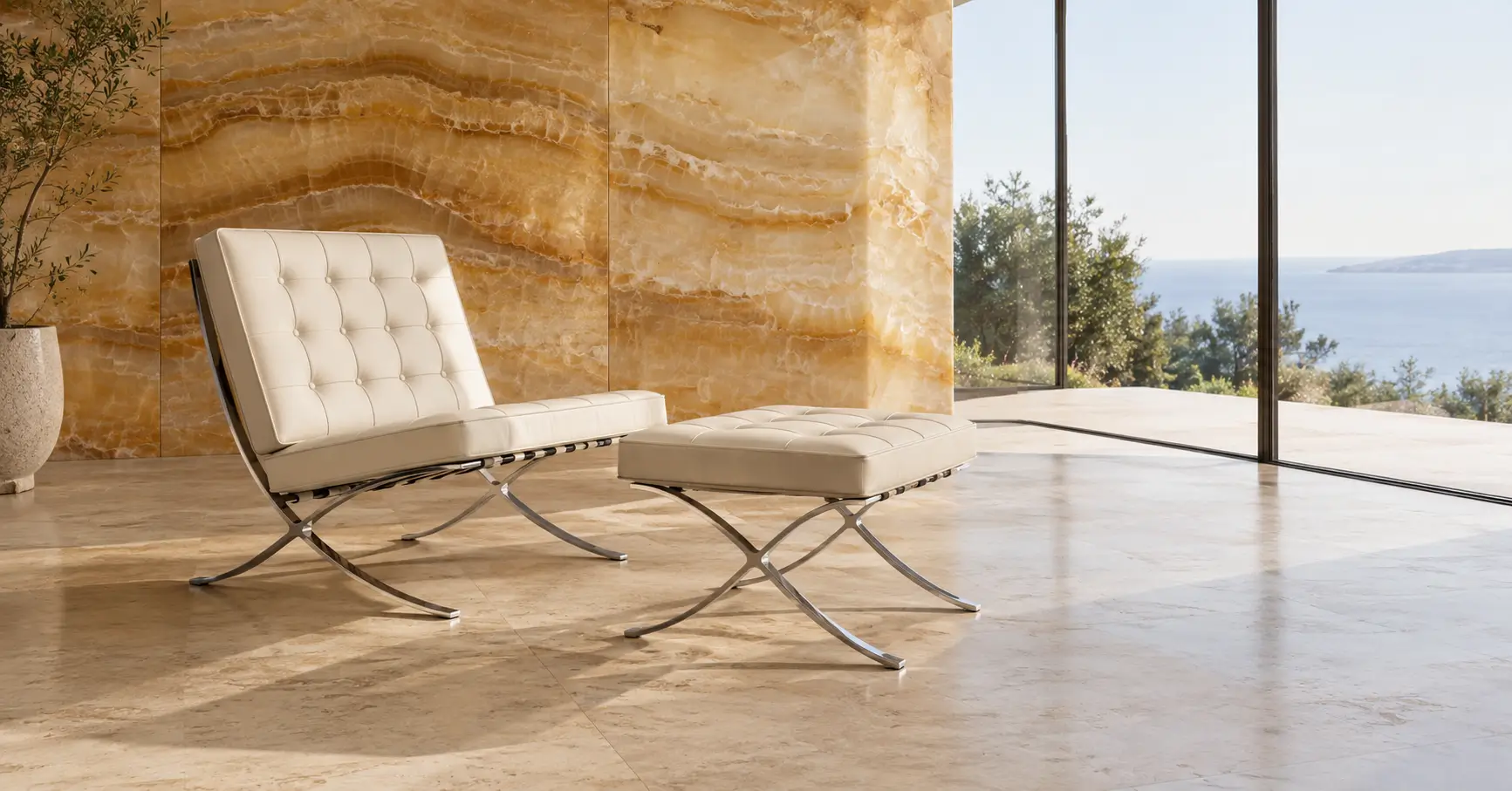
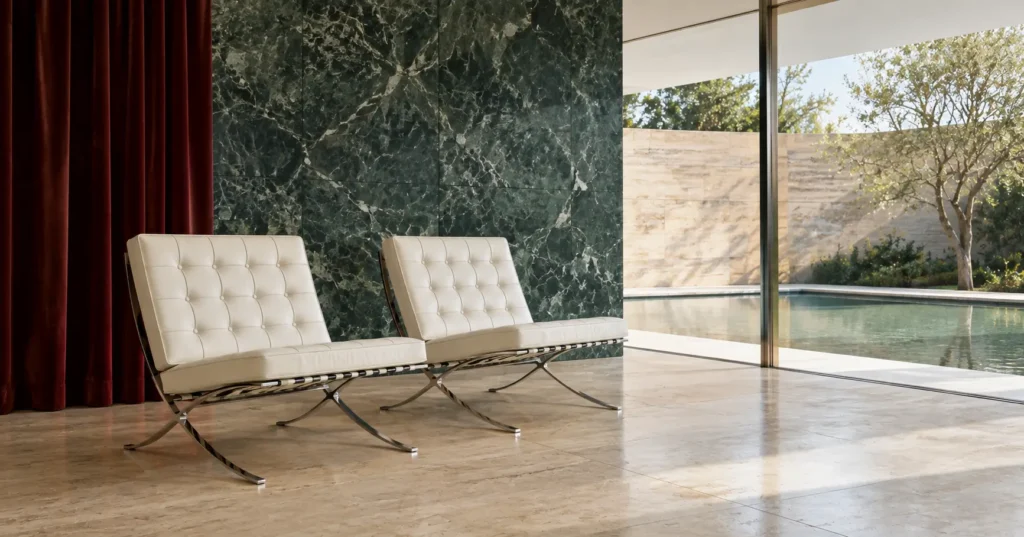
The chair was designed for a king, and that story still sells it. Mies van der Rohe and Lilly Reich created it with a matching stool for the German Pavilion at the 1929 International Exposition in Barcelona. Knoll describes both as a resting place for the King and Queen of Spain, then Alfonso XIII and Victoria Eugenie (Knoll, 2026).
Mies wanted a seat grand enough for royalty, saying “you just couldn’t use a kitchen chair” (MoMA, 2004). Only two chairs were made, both in white kid leather, and the royal couple reportedly never sat in them (MoMA, 2004; Knoll, 2026).
The pavilion stood for less than a year. It was rebuilt on the same site in 1986 (Ajuntament de Barcelona, 2016), and the Fundació Mies van der Rohe runs it today. Our history of the 1929 Barcelona Pavilion tells the full story.
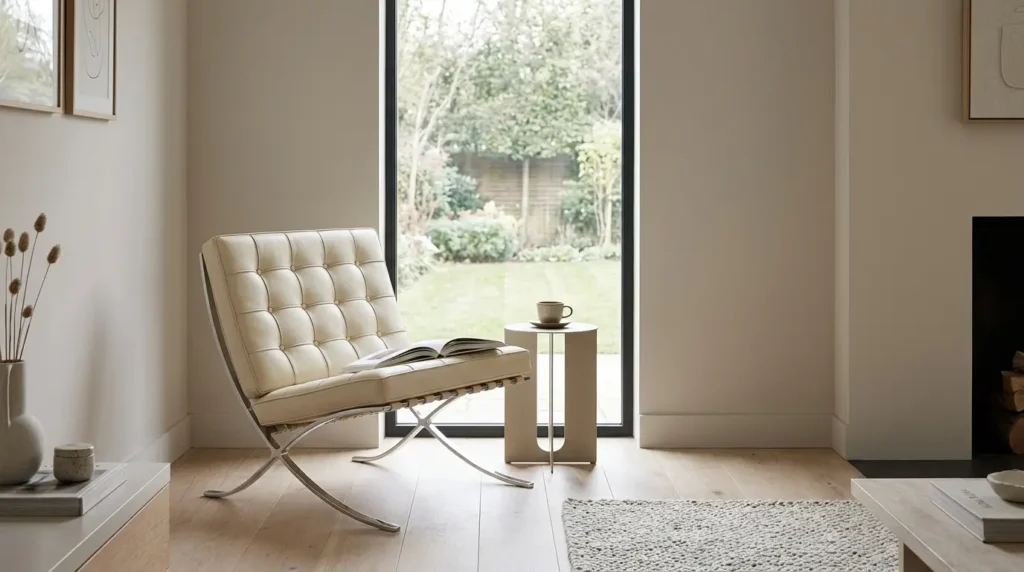
If you love the pale look of that first pair, our cream Barcelona chair and ottoman replica is a softer, warmer take on it, with the matching footstool included.
Why Does the Barcelona Chair Silhouette Never Look Dated?
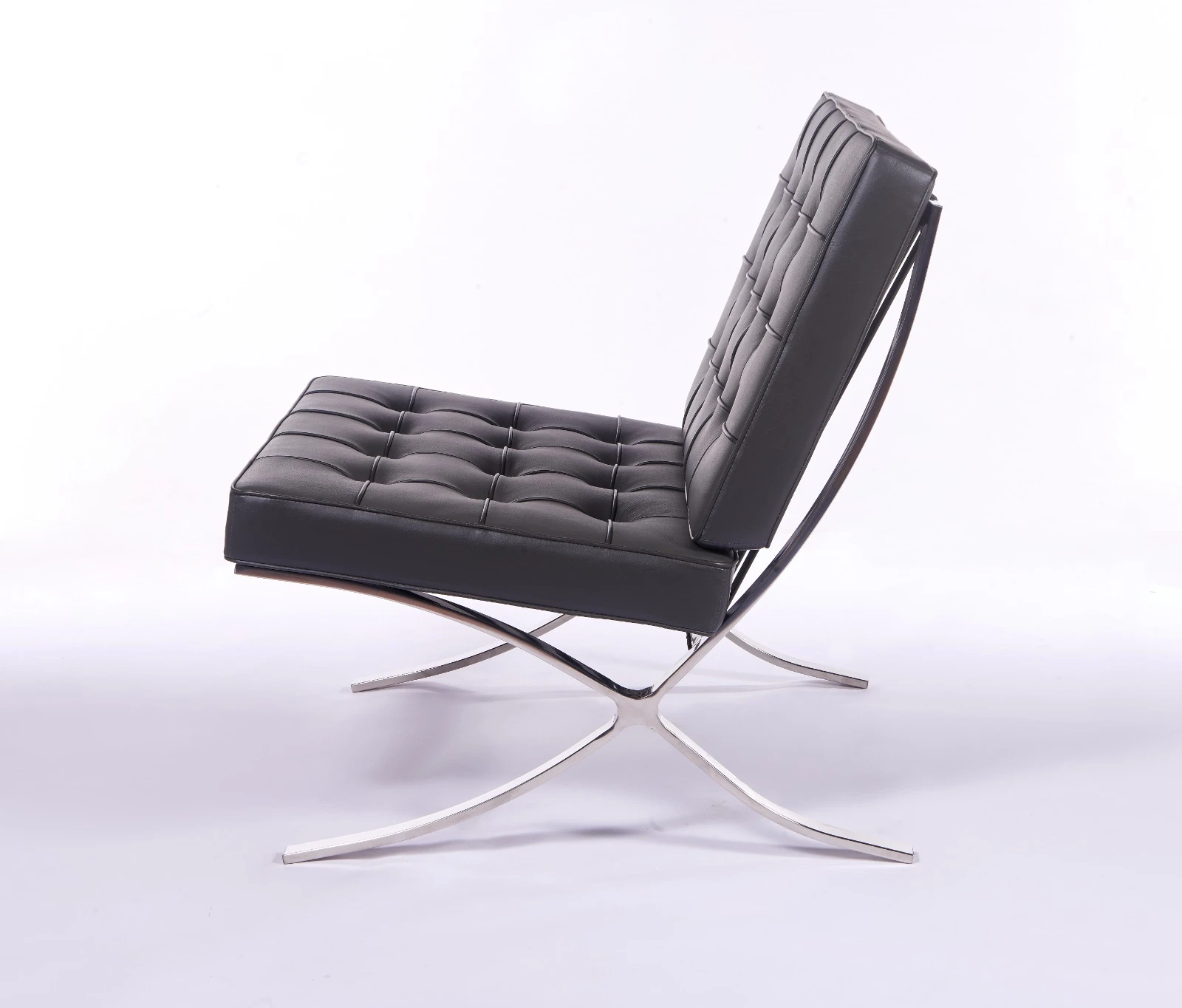
The silhouette never dates because it is built from two steel curves and very little else. From the side, one curve forms the back and front legs. It crosses a second, S-shaped curve that forms the seat and back legs, and that crossing makes the famous X (MoMA, 2004).
The idea is ancient. MoMA traces the shape to Egyptian folding stools and 19th-century neoclassical seats, while Knoll links it to the campaign chairs of Ancient Rome (MoMA, 2004; Knoll, 2026).
Barcelona chair appeal starts right here. Most chairs give away their decade through one detail, such as splayed 1950s wooden legs. The Barcelona chair has none. Like a plain trench coat, it has nothing trendy on it to go out of fashion.
Our own observation: the back is as finished as the front, so the chair can stand in the middle of an open-plan room. It is also nearly a cube. The Knoll original measures 75 × 77 × 77 cm (Knoll, 2026) and our replica 75 × 76 × 75 cm, both with a 43 cm seat.
How Did Knoll and the Mid-Century Revival Make the Chair Famous?
Knoll turned a two-chair exhibition piece into a product people could buy. Mies granted Knoll exclusive manufacturing and sales rights in 1953, according to Knoll’s own product history. He had been a friend and mentor to Florence Knoll at the Illinois Institute of Technology in Chicago.
That same year, MoMA added a Knoll-made Barcelona chair to its design collection. MoMA notes the chair has been in production since 1929, apart from one 16-year gap (MoMA, 2004).
The timing helped, because post-war architects were building glass-and-steel offices that the chair already matched. Mies himself moved to Chicago in 1938 (Knoll, 2026). For the years before, read the path Mies took from the Bauhaus to this chair.
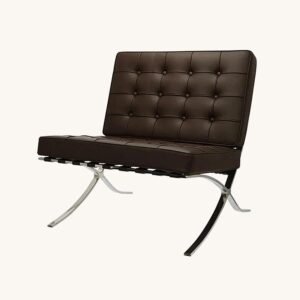
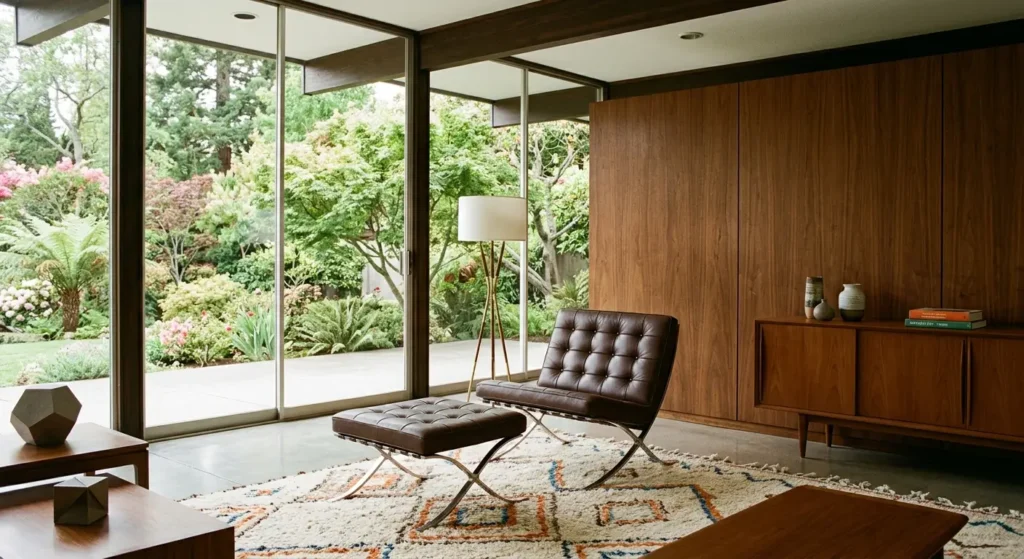
In a room with walnut or teak, we like a chocolate brown Barcelona style chair and ottoman, because dark leather suits the warm woods of that era.
Why Did the Barcelona Chair Become an Executive Office Staple?
It became an office staple because Mies used it in the offices he designed. The Seagram Building, which he designed with Philip Johnson on Park Avenue in New York, opened in 1958. Ezra Stoller’s photographs show Barcelona chairs in its fifth-floor executive reception room (Canadian Centre for Architecture, 1958).
The habit has lasted: UK office fit-out firm K2 Space says the chair is still popular with its financial-services clients (K2 Space, 2026).
There are practical reasons too:
- The 43 cm seat and fixed back angle suit a short wait or meeting.
- There are no wheels or gas lifts to break or service.
- Leather wipes clean, which matters in a busy reception.
- Two chairs and a 50 cm side table fill about 2 metres of wall.
For a modern office, a dark grey Barcelona chair replica looks corporate without the hard contrast of black, especially on concrete or pale oak floors.
Why Is an Original Barcelona Chair So Expensive?
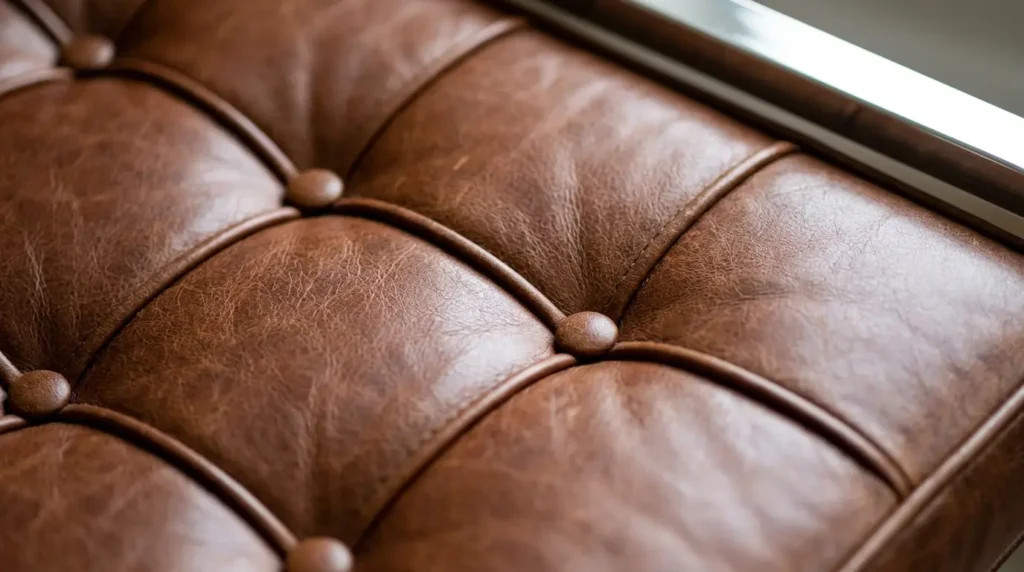
The original is expensive because much of it is made by hand. Knoll cuts the cushions from 40 separate leather panels, all from a single hide. Each panel is hand-welted (given a piped edge) and hand-tufted (buttoned down), and the chrome frame is hand-buffed to a mirror finish (Knoll, 2026).
A German Knoll dealer lists the chair from €8,496, before you add the ottoman (smow, 2026). For some owners, that price is part of the appeal, because people recognise the tufted grid.
Is the Barcelona Chair Comfortable Enough for Everyday Use?
Yes, for sitting upright to read or talk, but it is not a chair to nap in. The seat is low at 43 cm, the back angle is fixed and the cushions are fairly firm. You sit in it rather than sink into it.
At 75 cm wide it needs space, and in a room narrower than about 2.5 m, one chair is usually the limit. If you want to stretch out for a film, choose a reclining lounge chair instead.
Why Do So Many People Choose a Barcelona Chair Replica?
Most people choose a replica because they want the shape, and the shape is what made the chair famous. So why is the Barcelona chair so popular with buyers today? Because the look is finally within reach.
Our Barcelona style chairs are replicas of the Mies van der Rohe and Lilly Reich design. They are not made or licensed by Knoll, and we say so plainly. What we control is the build: hand-tufted leather cushions on a polished steel X-frame, pre-fitted cushions that clip straight on, and shipping from our EU warehouse.
Every order has free EU delivery in 4 to 7 working days, with VAT included and no customs charges, plus 14-day free returns and a 2-year warranty.
Before you buy any replica, check four things:
- Ask whether the cushions are real leather or PU (polyurethane) leather, because the two should not cost the same.
- Look at the X-joint of the frame, which should be smooth with no rough welds.
- Check that the straps under the cushions are leather and sit tight.
- Make sure the tufted squares form an even grid with level buttons.
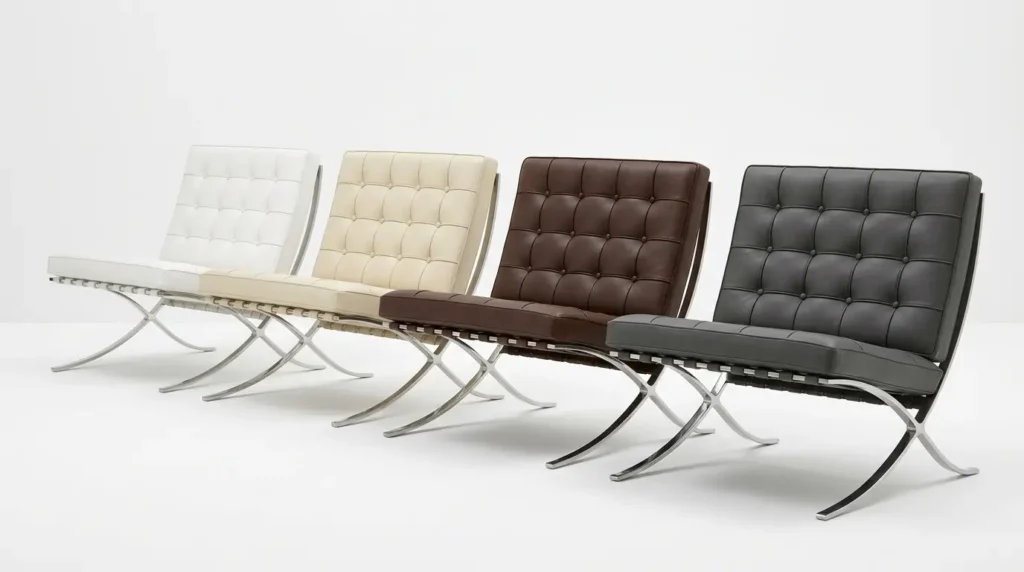
Our guide on how to tell a real Barcelona chair from a replica goes deeper. For a bright, gallery-like room, a white Barcelona chair and ottoman is the closest match to the 1929 originals. Or see the full Barcelona chair collection in every colour, with or without an ottoman.
Frequently Asked Questions About the Barcelona Chair’s Popularity
Why is the Barcelona chair famous?
It is famous because Mies van der Rohe and Lilly Reich designed it as royal seating for the 1929 German Pavilion in Barcelona. Knoll has produced it since 1953.
How long has the Barcelona chair been in production?
MoMA says the design has been made since 1929, with one 16-year gap. Knoll has held the production rights since 1953.
Is the Barcelona chair still in style in 2026?
Yes. Knoll still makes it, and nothing in its steel-and-leather shape ties it to one decade.
Why do offices use Barcelona chairs?
They look formal and need almost no maintenance. Mies set the example at New York’s Seagram Building in 1958.
Is a Barcelona chair replica worth buying?
Yes, if you want the look for everyday use rather than a collector’s piece. Check the leather and frame, and buy from a seller who says clearly that it is a replica.
Follow Sederica in Google
Add us as a preferred source and our buying guides will appear more often in your Google results.
Add as preferred source