TL;DR
- Choose walnut if you want a warm, relaxed chair that suits most homes and lighter floors. Choose rosewood if you want the darker, more formal look of the 1956 original. Both woods sit on the same shell, so strength is identical.
- Wood barely changes the price: our black leather set costs €845 in walnut and €839 in natural rosewood (Sederica, November 2026).
- The 1956 chair used Brazilian rosewood, which has been on CITES Appendix I since June 1992, so no newly made chair should use it (CITES, 1992).
- Walnut tends to lighten towards honey in sunlight, while rosewood’s tone varies between batches. Buy the chair and ottoman together.
In This Guide
Walnut or Rosewood: Which Is Better for an Eames Lounge Chair?
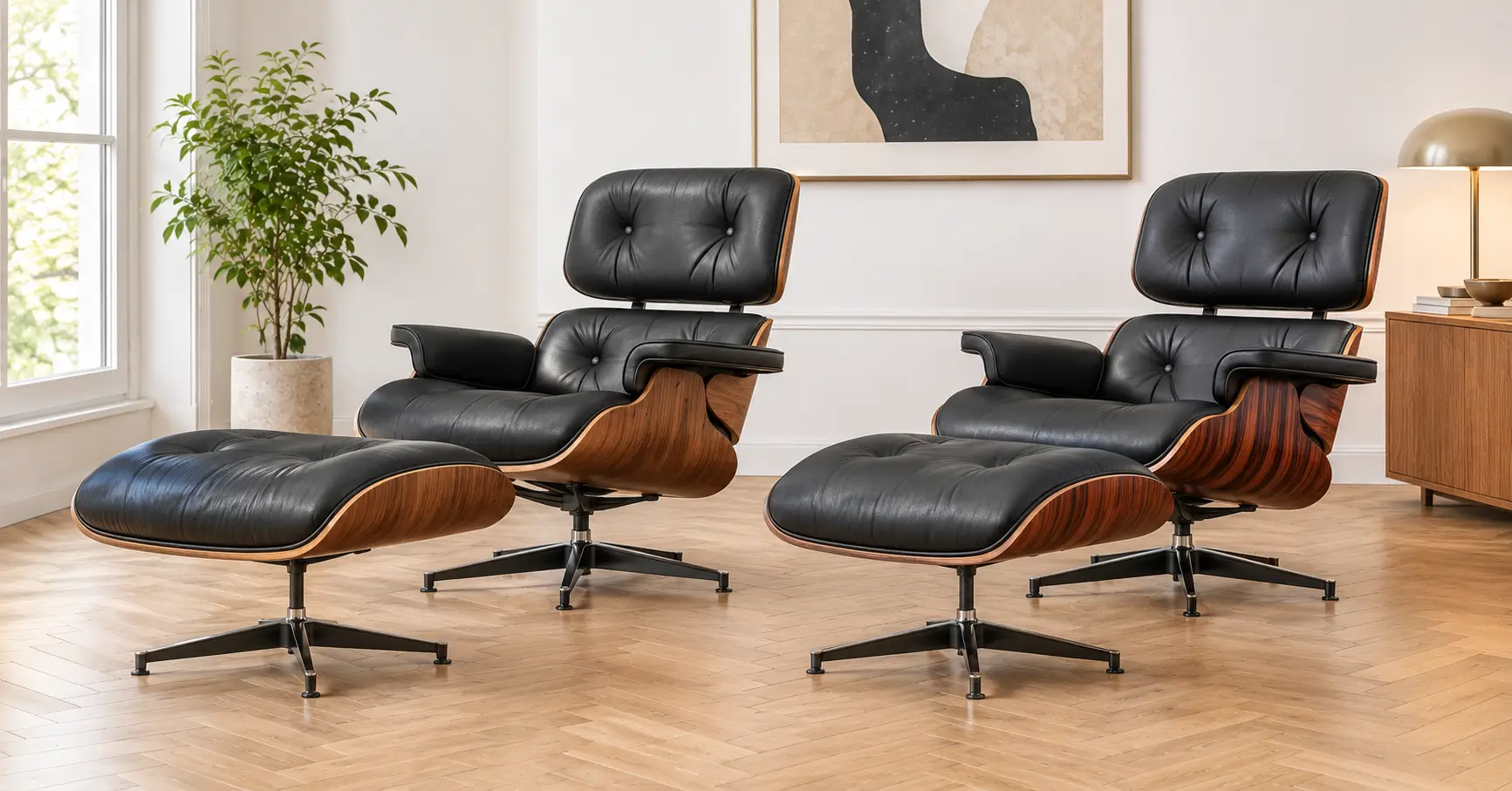
Walnut is better suited to relaxed rooms, lighter floors and first-time buyers, while rosewood is the stronger option for dark leather, formal rooms and anyone who wants the 1956 look. The walnut vs rosewood Eames choice depends mainly on your floor colour, the daylight in the room and your leather colour.
Neither wood is stronger. On a well-made Eames style lounge chair, both are veneers on the same seven-layer moulded plywood shell, so you are choosing a look, not a level of quality.
Choose walnut if:
- Your floors are pale oak, ash or light grey, and you want a warm chair against them.
- You want tan, cognac, white and black leather all to work.
- Your room faces north or gets little daylight, where walnut’s mid-brown tone stays visible.
Choose rosewood if:
- You want the closest look to the chair Charles and Ray Eames launched with Herman Miller in 1956.
- You prefer black, dark brown or olive green leather and a formal mood.
- Your room has strong daylight or good lamps, so the deep grain can be seen.
Walnut vs Rosewood Eames Lounge Chair at a Glance
This table compares Eames walnut vs rosewood shells on the points that change how the chair looks at home.
| Feature | Walnut | Rosewood | What it means for you |
|---|---|---|---|
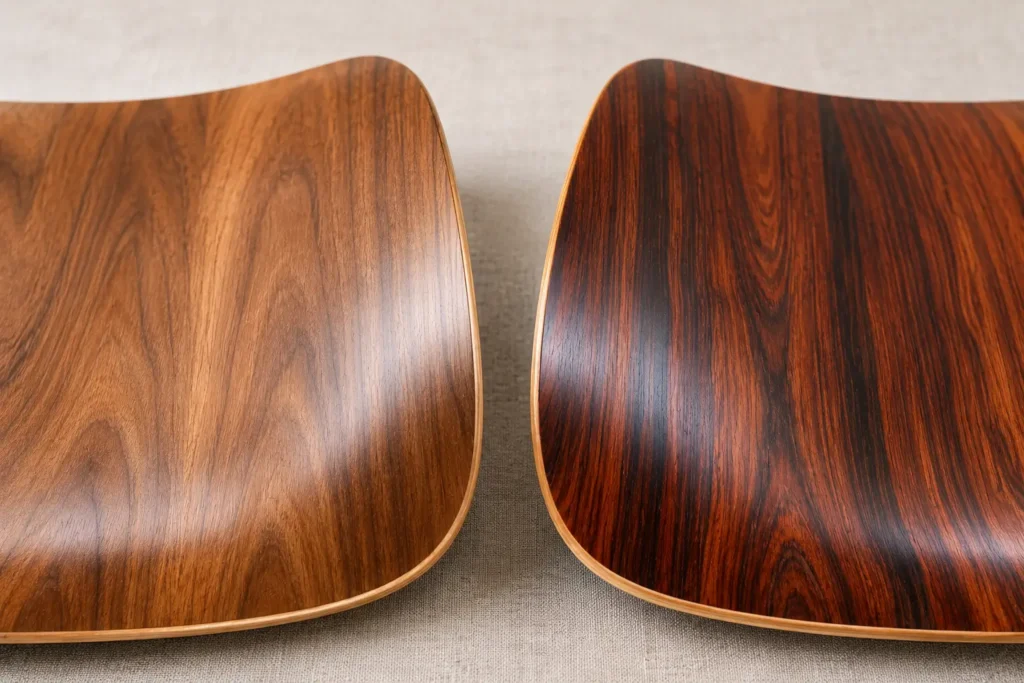
| Colour | Mid to dark brown, honey tones | Deep reddish-brown, near-black stripes | Rosewood reads darker |
| Grain | Calm and even | Bold, high-contrast figure | Walnut suits busy rooms |
| History | Standard on originals since the early 1990s | The wood of the 1956 original | Rosewood is period-correct |
| Ageing | Lightens towards honey in sun | Tone varies between batches | Buy chair and ottoman together |
| Strength | Same seven-layer shell | Same seven-layer shell | No difference |
What Is the Difference Between Walnut and Rosewood on an Eames Chair?
The difference between walnut and rosewood on an Eames lounge chair is colour, grain and how the surface changes over time. The structure is the same: thin plywood layers pressed into a curve, with a wood veneer on the faces.
A veneer is a thin slice of real wood, usually about 0.6 mm thick (The Wood Veneer Hub, accessed 2026). Think of the top layer of an engineered oak floor: what you see is real wood, but the strength comes from below.
That is why most rosewood vs walnut furniture guides do not help here. They compare solid boards. On a chair shell, scratch resistance depends on the finish, not the tree.
Is palisander the same as rosewood?
Yes, in shopping terms. Palisander is the continental European name for rosewood (Palisander in German, palissandre in French), so “Eames walnut vs palisander” is the same choice. Santos palisander, used by Herman Miller and Vitra today, comes from Machaerium scleroxylon, a South American tree that looks like rosewood but is not a true Dalbergia rosewood (Wikipedia, 2026).
What Wood Did the Original 1956 Eames Lounge Chair Use?
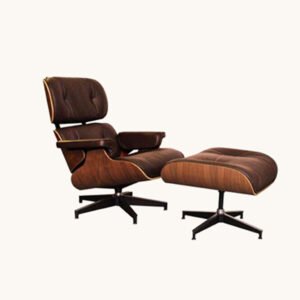
The original Eames lounge chair used Brazilian rosewood veneer over five-layer plywood shells. Charles and Ray Eames designed it for Herman Miller, which launched it in 1956, and Brazilian rosewood stayed on the chair until the early 1990s (Wikipedia, 2026). Current shells are seven-ply (Herman Miller, 2026).
CITES, the treaty that controls trade in endangered species, placed Brazilian rosewood on Appendix I, its strictest level, on 11 June 1992 (CITES, 1992). Rosewood returned in 2006, for the chair’s 50th anniversary, as Santos palisander from Forest Stewardship Council (FSC) certified forests (Herman Miller, quoted by GR Shop, 2006).
Vitra, which makes the chair for Europe, buys its Santos palisander from FSC-certified forests in Bolivia (Cimmermann, 2026). Our guide explains how the 1956 lounge chair was designed and made.
Walnut Eames Lounge Chair: Who It Suits and Where It Falls Short
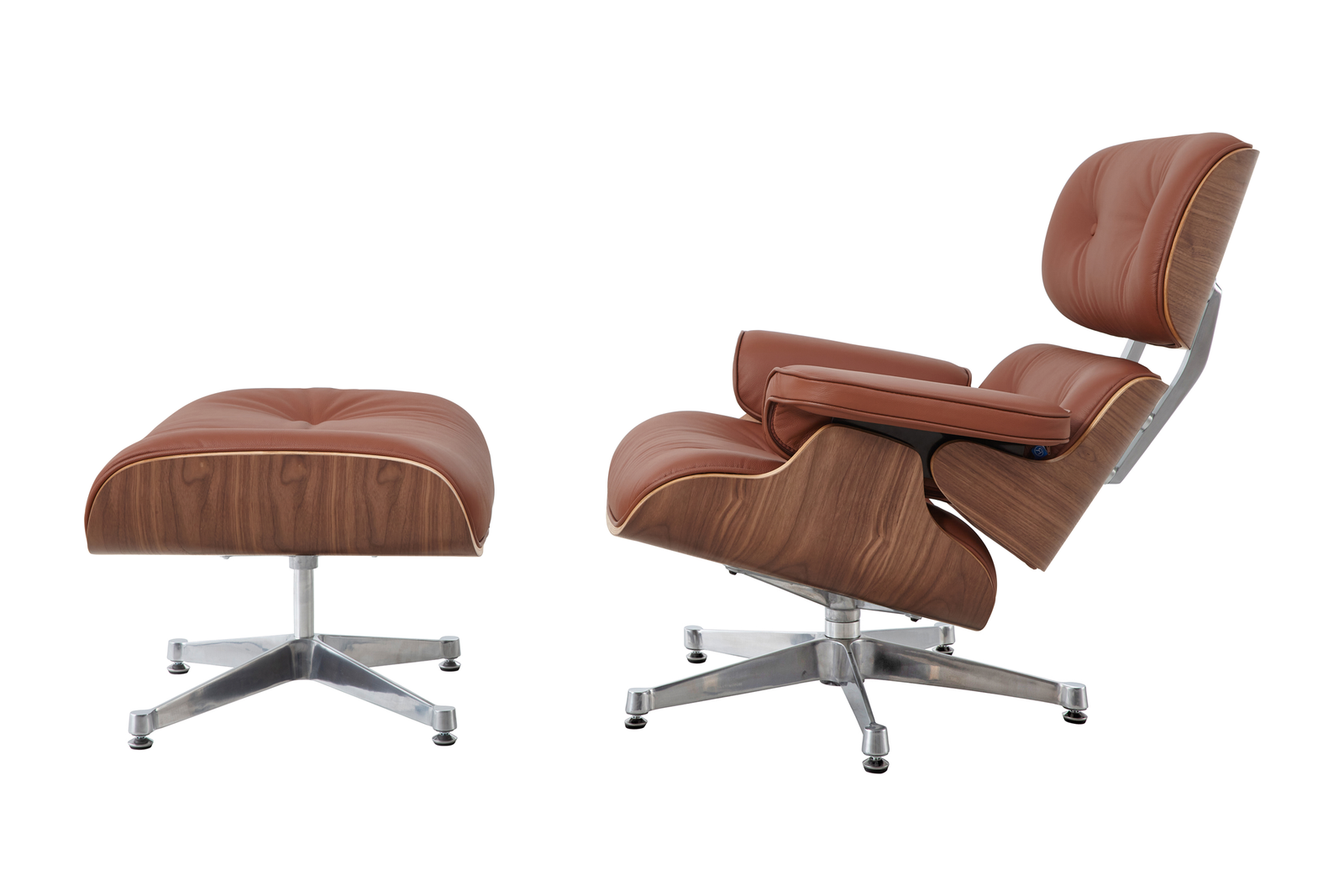
A walnut Eames lounge chair suits most homes and most buyers. Its calm grain sits well beside oak floors, white walls and mixed furniture.
Walnut also mellows. New walnut is dark brown, and with air and sunlight a honey colour comes through the grain, mostly in the first year (Room & Board, 2023). The limits are small: walnut is less faithful to the 1956 original, and it can blend into a dark walnut floor.
European walnut vs American walnut: does it matter?
European walnut is slightly lighter, with more grey in its tone, than American walnut (Cimmermann, 2026). Vitra’s walnut comes from Southeast and Central Europe (Vitra, 2026). Several Sederica walnut models use American walnut veneer, which gives a darker, chocolate-brown shell.
Rosewood Eames Lounge Chair: Who It Suits and Where It Falls Short
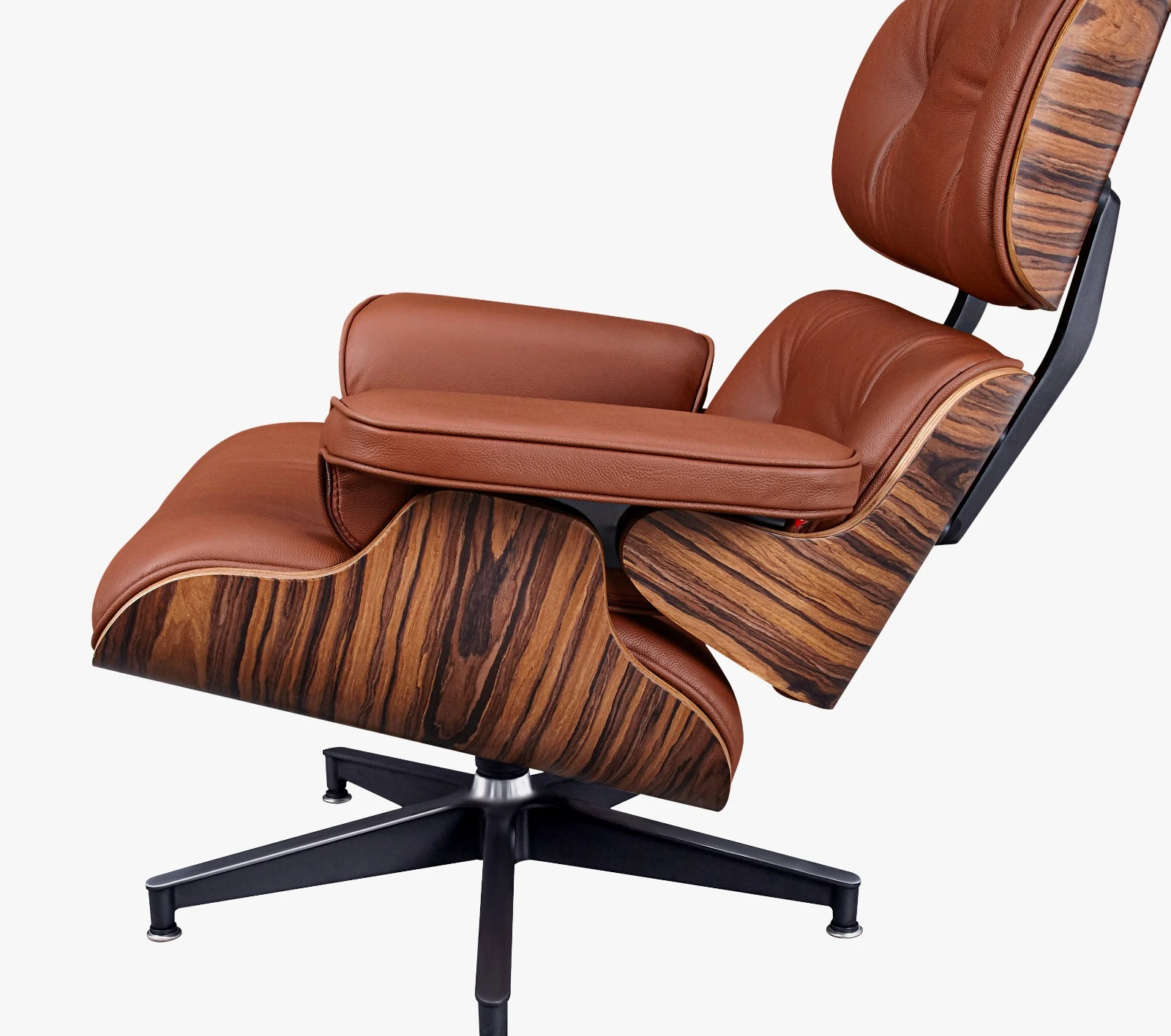
A rosewood Eames lounge chair suits buyers who want the original 1956 character: dark, striped and formal. It looks best with black or deep brown leather, in a room with good light.
The main limit is variation. Finnish Design Shop notes that palisander’s tone can vary considerably between production batches and advises buying the chair and ottoman from the same batch (Finnish Design Shop, accessed 2026).
Rosewood also asks more honesty from the seller. At Sederica, we sell our shells as rosewood veneer and do not name a species we cannot document. A new chair sold as “Brazilian rosewood” is a red flag.
Head-to-Head: How Walnut and Rosewood Compare in Real Rooms
Walnut and rosewood perform the same in daily use, so the real comparison is visual: floors, light and leather.
Floors and walls
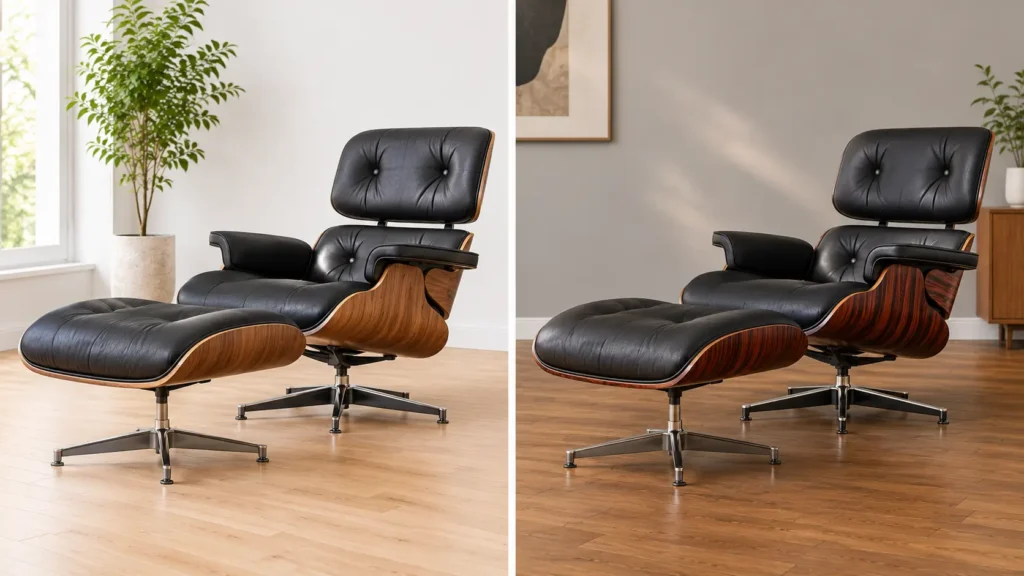
A chair that matches the floor too closely loses its outline, so start there:
| Your floor or room | Better pick | Why |
|---|---|---|
| Pale oak or ash | Either wood | Walnut feels softer, rosewood more graphic |
| Mid-brown oak or teak | Rosewood | The darker shell stands apart |
| Dark walnut or wenge | Either, with tan or white leather | The leather creates contrast |
| Grey tiles or concrete | Walnut | Warm wood balances a cool floor |
| Busy rug or wallpaper | Walnut | Calmer grain avoids clutter |
Light and ageing
Rosewood needs light to show its grain, while walnut stays readable in soft light. In a dim, north-facing room, rosewood can look flat and heavy. In a bright, south-facing room, its stripes come alive, and walnut mellows faster. Screens also shift brown tones, so judge both woods from more than one photo.
What we tell customers who ask us to choose: walnut looks much the same in morning and evening light, while rosewood changes more, from warm reddish-brown in sun to almost black under lamps. If you cannot decide, send us a photo of your floor through live chat and we will tell you which wood we would pick.
Leather pairing
Leather colour changes how each wood reads more than any other choice:
| Leather | With walnut | With rosewood |
|---|---|---|
| Black | Classic, high contrast | The 1956 look |
| Tan or cognac | Warmest pairing | Two strong browns compete |
| White or ivory | Bright and modern | Dramatic contrast |
| Olive green | Quiet | Striking and mid-century |
Care and durability
Care is identical. Dust the shells with a soft, dry cloth and keep the chair away from radiators and strong sun. Herman Miller gives the same guidance for both woods: standard veneers need only occasional dusting (Herman Miller, 2026).
Our verdict: walnut wins on more floors, light levels and leathers, while rosewood wins in bright rooms with black or olive leather.
Is Walnut More Sustainable Than Rosewood?
Walnut is the easier wood to trace, but modern rosewood-look veneers are not the endangered wood of the 1956 chair. American black walnut and Santos palisander are both listed as Least Concern by the IUCN (Wikipedia, 2026).
The real issue is documentation: “rosewood” covers many species, some tightly restricted. If sourcing is your top concern, choose walnut. If you love the rosewood look, buy from a seller who is open about the veneer.
Rosewood vs Walnut Chair: Pros and Cons
The trade-offs are about looks and fit, not quality.
Walnut
- Pro: it works with every common leather colour.
- Pro: its calm grain suits busy interiors.
- Con: it is less faithful to the 1956 original.
- Con: it can blend into mid-brown or dark wood floors.
Rosewood
- Pro: it is the closest look to the first Eames lounge chair.
- Pro: its bold grain makes the shell a feature.
- Con: its tone can vary between production batches.
- Con: it can look heavy in small, dim rooms.
Best Wood for an Eames Lounge Chair: Which Suits Your Home?
Walnut is the best wood for most buyers, but some rooms and tastes tip the answer towards rosewood.
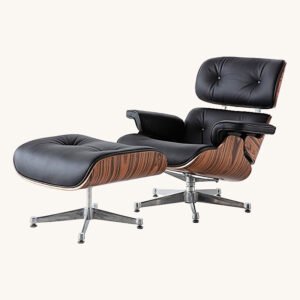
- Best for first-time buyers: walnut with black leather. Our classic Eames lounge chair in black and walnut is the set we suggest when someone cannot decide.
- Best for the 1956 look: rosewood with black leather, as on our Eames lounge chair in rosewood with black Italian aniline leather.
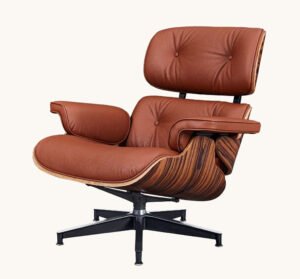
- Best for warm, relaxed rooms: walnut with cognac. The cognac Eames lounge chair in walnut uses waxy leather that develops a patina.
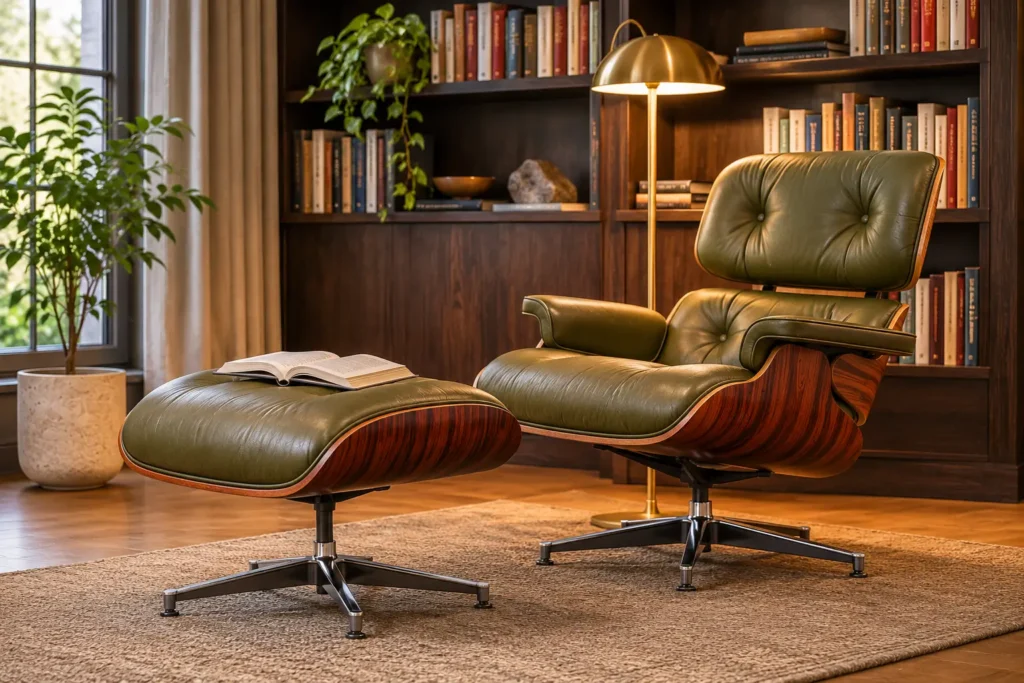
- Best for colour-confident rooms: rosewood with olive green. Our olive green Eames chair is the only olive set we sell.
- Best for small or north-facing rooms: walnut, as the lighter shell looks less heavy.
- Best for a study or home library: rosewood, where dark shelving and lamplight suit it.
Does Rosewood Cost More Than Walnut?
No. At Sederica, walnut and rosewood sets with the same leather and a similar base cost almost the same. Our price differences come from leather, base and size, not the wood.
| Chair and ottoman set | Walnut | Rosewood | Gap |
|---|---|---|---|
| Black leather, standard base | €845 | €839 (natural rosewood) | €6 |
| Tan brown leather, chrome base | €825 | €835 | €10 |
These are sale prices on sederica.com in November 2026, so check each product page for the current figure. Only a darker shade costs more: our dark rosewood set is €929.
The originals follow the same pattern. Herman Miller lists all seven shell finishes at one price (Herman Miller, 2026), and Innes lists Vitra’s Lounge Chair and Ottoman from £6,760 (Innes, 2026). We explain what drives the price of the originals separately.
Pay for the leather and base you want, never for a large “rosewood premium” on a replica. To compare sellers on build quality, see our buyer’s guide to Eames lounge chair replicas.
Frequently Asked Questions About Walnut vs Rosewood Eames Chairs
Is walnut or rosewood better for an Eames lounge chair?
Neither is stronger, because both are veneers on the same seven-layer shell. Walnut is better for most homes and warm leathers, while rosewood suits buyers who want the darker 1956 look.
What wood was the original Eames lounge chair made from?
The 1956 original used Brazilian rosewood veneer over five-layer plywood shells. Herman Miller stopped using it in the early 1990s (Wikipedia, 2026).
Is palisander the same as rosewood?
In shopping terms, yes. Palisander is the continental European word for rosewood, although Santos palisander comes from Machaerium scleroxylon, not a true Dalbergia rosewood (Wikipedia, 2026).
Does walnut veneer change colour over time?
Yes. Natural walnut tends to lighten towards honey with air and sunlight, mostly in the first year (Room & Board, 2023). Keeping the chair out of strong direct sun slows the change.
Can you still buy a rosewood Eames lounge chair?
Yes. New originals use Santos palisander, and replicas use other rosewood veneers. Brazilian rosewood appears only on vintage chairs made before the early 1990s, which should come with clear provenance.
Which Wood Should You Order?
If you are stuck, choose walnut. It suits more rooms and leather colours, and it costs the same. Choose rosewood when you already want the darker 1956 character and your room has the light to show it.
Explore our walnut Eames lounge chair replica range for warm, flexible pairings, or the rosewood Eames lounge chair replica collection for the original dark look. You can also compare every Eames style lounge chair and ottoman we stock.
-
Walnut Eames lounge chairs, Black leather Eames lounge chairs
Original price was: €1.185,00.€879,00Current price is: €879,00. Add to basket -
Rosewood Eames lounge chairs, Black leather Eames lounge chairs
Original price was: €1.385,00.€929,00Current price is: €929,00. Add to basket -
Walnut Eames lounge chairs, Brown, tan and cognac Eames lounge chairs
Original price was: €1.285,00.€825,00Current price is: €825,00. Add to basket -
Rosewood Eames lounge chairs, Brown, tan and cognac Eames lounge chairs
Original price was: €1.285,00.€835,00Current price is: €835,00. Add to basket
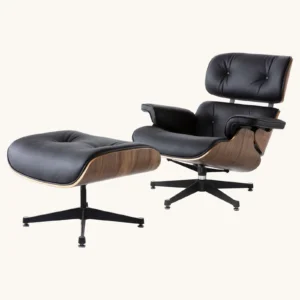
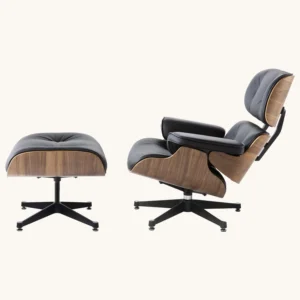


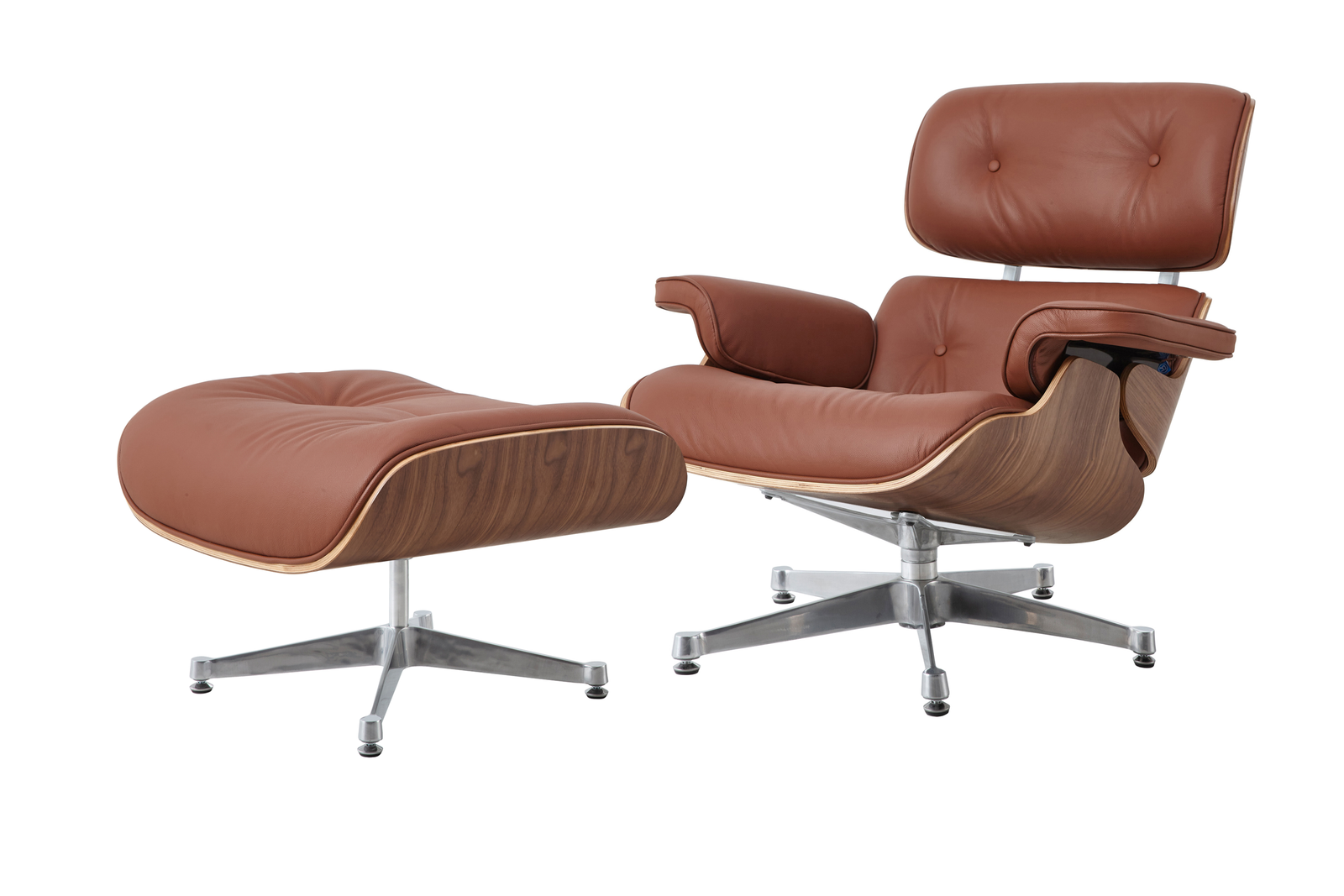
Sederica sells replicas inspired by the Eames Lounge Chair and Ottoman by Charles and Ray Eames, and has no connection with Herman Miller or Vitra.
Sources
- CITES (1992). Dalbergia nigra, Appendix I listing, 11 June 1992.
- Cimmermann (2026). Vitra Eames lounge chair: colours, materials and finishes.
- Finnish Design Shop (accessed 2026). Ask the Customer Service: matching wooden parts on the Eames Lounge Chair.
- GR Shop (2006). Herman Miller re-releases rosewood Eames Lounge Chair and Ottoman.
- Herman Miller (2026). Eames Lounge Chair and Ottoman, shell finishes.
- Innes (2026). Vitra Eames Lounge Chair.
- Room & Board (2023). How Wood Changes Color Over Time.
- The Wood Veneer Hub (accessed 2026). Wood Veneer Thickness.
- Vitra (2026). Lounge Chair.
- Wikipedia (2026). Eames Lounge Chair.
- Wikipedia (2026). Machaerium scleroxylon.
- Wikipedia (2026). Juglans nigra.
Follow Sederica in Google
Add us as a preferred source and our buying guides will appear more often in your Google results.
Add as preferred source