TL;DR
- Buying and owning an Eames chair replica for personal use is legal in most EU countries and the US.
- Selling is more complex. It depends on the country and whether the specific design is still protected by copyright.
- Two different laws apply: copyright protects the design’s shape (life of the designer plus 70 years), while trademark protects the name “Eames”.
- The UK tightened its rules in 2016. Enforcement across the EU varies but is trending stronger since the 2019 Cofemel ruling.
- This article is general information, not legal advice. See our legal disclaimer for our full position.
Are Eames chair replicas legal in Europe? For you as a buyer, the short answer is usually yes – owning one for personal use is legal across most of the EU. The fuller picture involves two separate laws, a 2019 court ruling that changed the landscape, and real differences from one country to the next. This guide explains how replica furniture law actually works in Europe, in plain language, so you can shop with confidence.
Are Eames Chair Replicas Legal in Europe? The Short Answer
For buyers, owning a replica Eames chair for personal use is legal in most EU countries and the US. The legal questions sit mainly on the manufacturing and selling side, and the answer there depends on where you are and whether the design is still within its copyright term.
This is why the phrase “is replica furniture legal” has no single yes-or-no answer. A design released in 1929 sits in a very different legal position from one released in 1956, because protection is measured from the designer’s lifetime, not from today. The country matters too, since enforcement is not uniform across Europe.
Copyright vs Trademark: The Two Rules That Actually Matter
Most confusion about replica furniture comes from mixing up two separate legal tools. They protect different things and last for different lengths of time.
Copyright protects the artistic design itself – the shape of the chair. In the EU it lasts for the designer’s life plus 70 years. Charles Eames died in 1978 and Ray Eames in 1988, so the Eames Lounge Chair design can remain under copyright in EU countries that apply it until the late 2040s or 2050s.
Trademarks protect names and logos, not shapes. “Eames” and “Herman Miller” are protected names. A trademark does not expire as long as it is used commercially. This is the reason careful sellers describe their chairs as “Eames-style” rather than “an Eames” – the wording keeps them clear of the trademark on the name.
Here is the point that trips people up. Calling a chair “Eames-style” addresses the trademark question, but it does not settle the copyright question. Copyright covers the design regardless of what you call it. So the name and the shape are governed by two different rules, and both have to be considered separately.
A third tool, the registered Community design right, lasts up to 25 years and must be actively filed. For a design from 1956, that window closed long ago, which is why the live debate centres on copyright rather than registered designs.
The EU Picture After Cofemel (2019)
The most important recent change to replica furniture law in the EU came from a 2019 Court of Justice ruling known as Cofemel. Before it, several countries only granted copyright to designs that showed special artistic merit, which left many mass-produced classics in a grey zone.
Cofemel changed that. The court held that a design qualifies for copyright if it is “original” – meaning the author’s own intellectual creation, reflecting free and creative choices – regardless of any artistic value test. Later rulings have reinforced this across the EU. The practical effect is that design classics are on firmer copyright footing in Europe than they were a decade ago, and the trend is toward stronger, more harmonised protection.
Country by Country: Why the Answer Changes at the Border
Even within Europe, replica law is not identical from one country to the next. Enforcement and national history still vary, so the same chair can sit in a different legal position depending on the market.

- United Kingdom. Until 2016, mass-produced designs lost protection 25 years after first sale, which supported a large replica industry. That changed when Section 52 of the Copyright, Designs and Patents Act was repealed on 28 July 2016, restoring life-plus-70 copyright to many mid-century designs and restricting the legal replica market.
- France. France has a long tradition of protecting design under copyright through its “unity of art” doctrine, and is generally one of the more protective markets for design classics.
- Italy. Italy strengthened copyright protection for design after Cofemel, applying it through decisions such as the 2020 Kiko case. As a major design market, it is known for active enforcement.
- Germany. Germany lowered the threshold for copyright in applied art with its 2013 “Geburtstagszug” decision, and its courts continue to hear significant furniture-design cases.
The honest takeaway is that most EU countries now protect original design classics under copyright, while the intensity of enforcement differs. If you are buying across borders or you sell furniture, it is worth checking the position in the specific country involved.
Replica or Counterfeit? An Important Difference
One distinction cuts through much of the confusion: a replica is not the same as a counterfeit. The difference is honesty.
A replica or reproduction openly copies a design without using the brand’s name or claiming to be the original. A counterfeit fakes the brand – it uses the trademarked name, logos, or labels to pass itself off as genuine. Counterfeiting is illegal everywhere and deceives the buyer. A clearly labelled “Eames-style” reproduction is not pretending to be a Herman Miller product, which is exactly why transparent naming matters.
What This Means If You Want to Buy an Eames-Style Chair
For the vast majority of shoppers, buying and owning a quality Eames-style chair for your own home is not what creates legal risk in Europe. Personal use sits on the safe side of the line in most EU countries.
The sensible approach is to buy from a seller who is transparent about what the product is. A company that describes its work honestly as an Eames-style reproduction, credits the original designers, and does not pretend to sell genuine originals is being straight with you. If you want the background on how these terms differ, our guide on original vs replica vs reproduction breaks it down in detail.
How Sederica Approaches This
At Sederica, we take a transparent approach to a subject that many sellers blur. We describe our chairs as Eames-style reproductions, never as genuine Eames or Herman Miller products. We credit Charles and Ray Eames as the original designers, and we do not claim our chairs are authentic originals or carry Herman Miller quality certification.
That honesty is the point. We would rather tell you plainly that you are buying a high-quality reproduction than dress it up as something it is not. For our full legal position and the terms that apply to your purchase, please read our legal disclaimer. Nothing on this page is legal advice, and if you have a specific legal question about your own country, a qualified lawyer is the right person to ask.
Frequently Asked Questions
Are Eames chair replicas legal in Europe?
Buying and owning an Eames chair replica for personal use is legal in most EU countries. Selling replicas is more complex and depends on the country and whether the specific design is still protected by copyright. This is general information, not legal advice.
Is it legal to buy a replica Eames chair?
Yes, for personal use it is legal in most EU countries and the US. Consumers buying a reproduction for their own home are generally not the focus of design-copyright enforcement, which centres on manufacture and sale.
Are designer furniture replicas legal in the EU?
It depends on the country and the design. Since the 2019 Cofemel ruling, original design classics are more consistently protected by copyright across the EU, but enforcement varies between member states. The UK restricted replicas of protected designs in 2016.
Why are replicas legal in some countries but not others?
Because copyright terms and enforcement differ by country. A design is protected for the designer’s life plus 70 years where copyright applies, and some markets enforce this more actively than others. The UK changed its law in 2016 to strengthen protection.
What is the difference between a replica and a counterfeit?
A replica openly copies a design without using the brand name or claiming to be the original. A counterfeit fakes the brand to pass itself off as genuine, which is illegal everywhere. An honestly labelled “Eames-style” chair is a reproduction, not a counterfeit.
Is it legal to sell “Eames-style” furniture?
Using “Eames-style” rather than “Eames” addresses the trademark on the name, but copyright in the design is a separate question that depends on the country. Sellers should treat the name and the shape as two different legal issues. This is general information, not legal advice.
Explore Our Eames-Style Lounge Chairs
We build our Eames-style reproductions transparently, in full-grain leather with carefully chosen veneers, at a fraction of the licensed price. A few to compare:
-
Sederica Eames Lounge Chair Replica & Ottoman
Original price was: €1.575,00.€988,00Current price is: €988,00. Add to basket -
Sederica Eames Lounge Chair Replica & Ottoman
Original price was: €1.350,00.€885,00Current price is: €885,00. Add to basket -
Sederica Eames Lounge Chair Replica & Ottoman
Original price was: €1.565,00.€995,00Current price is: €995,00. Add to basket
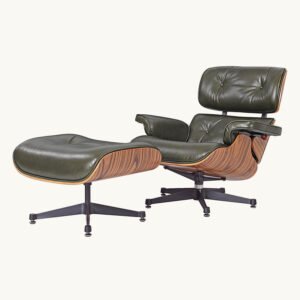
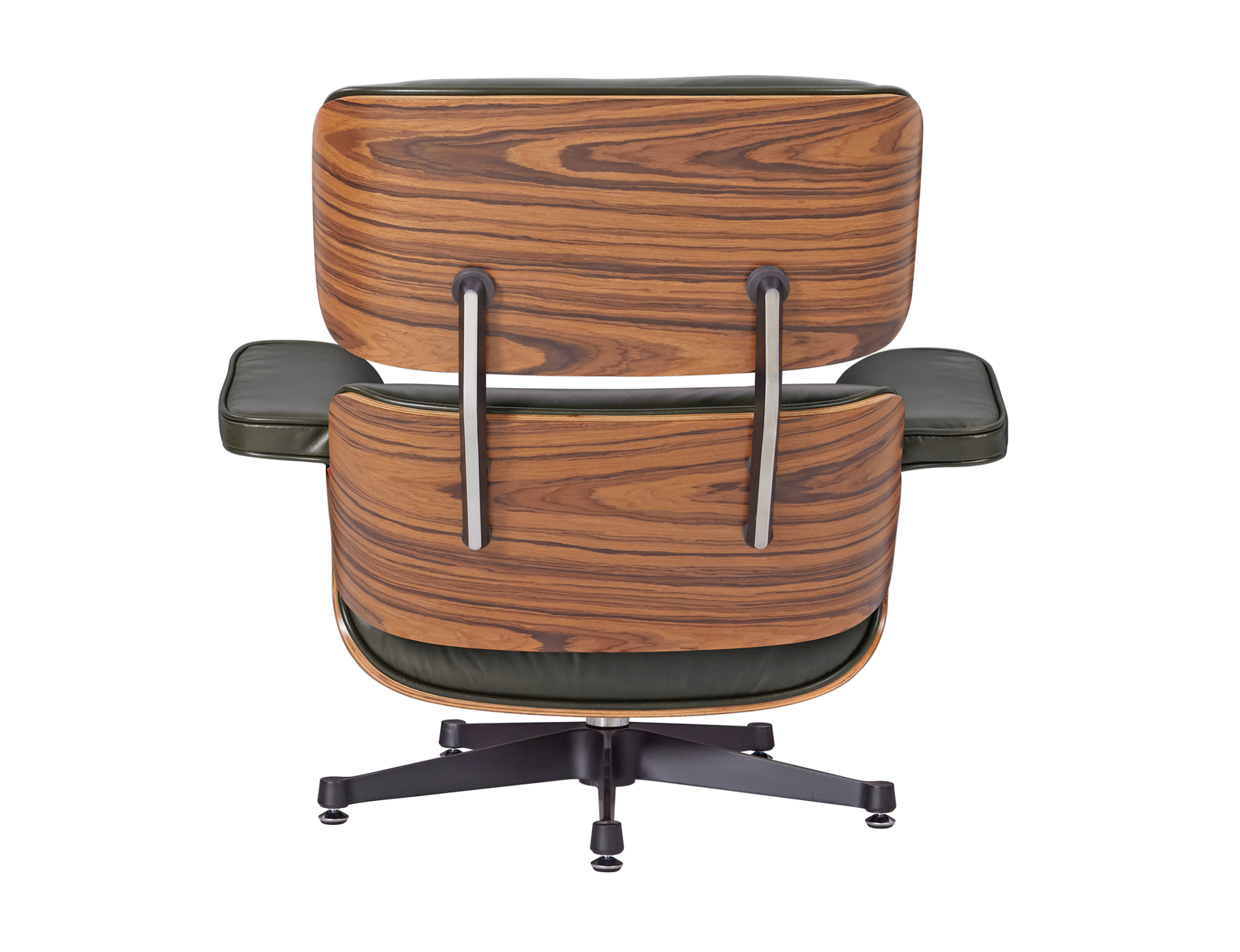
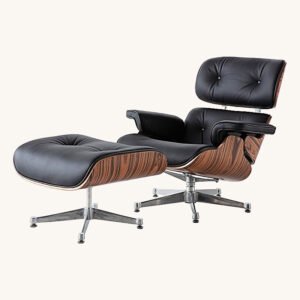
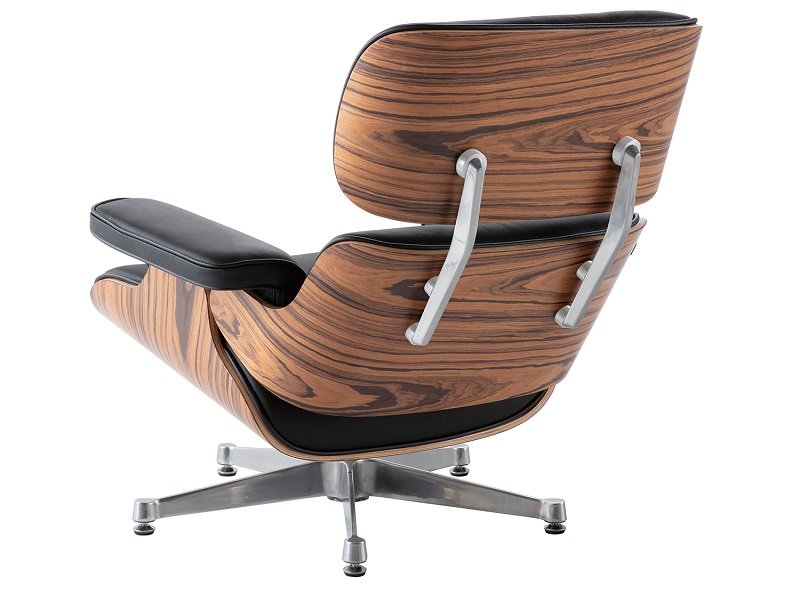
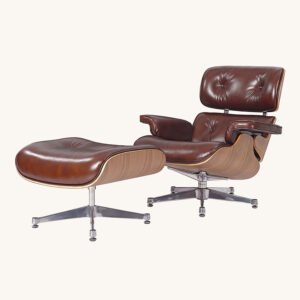
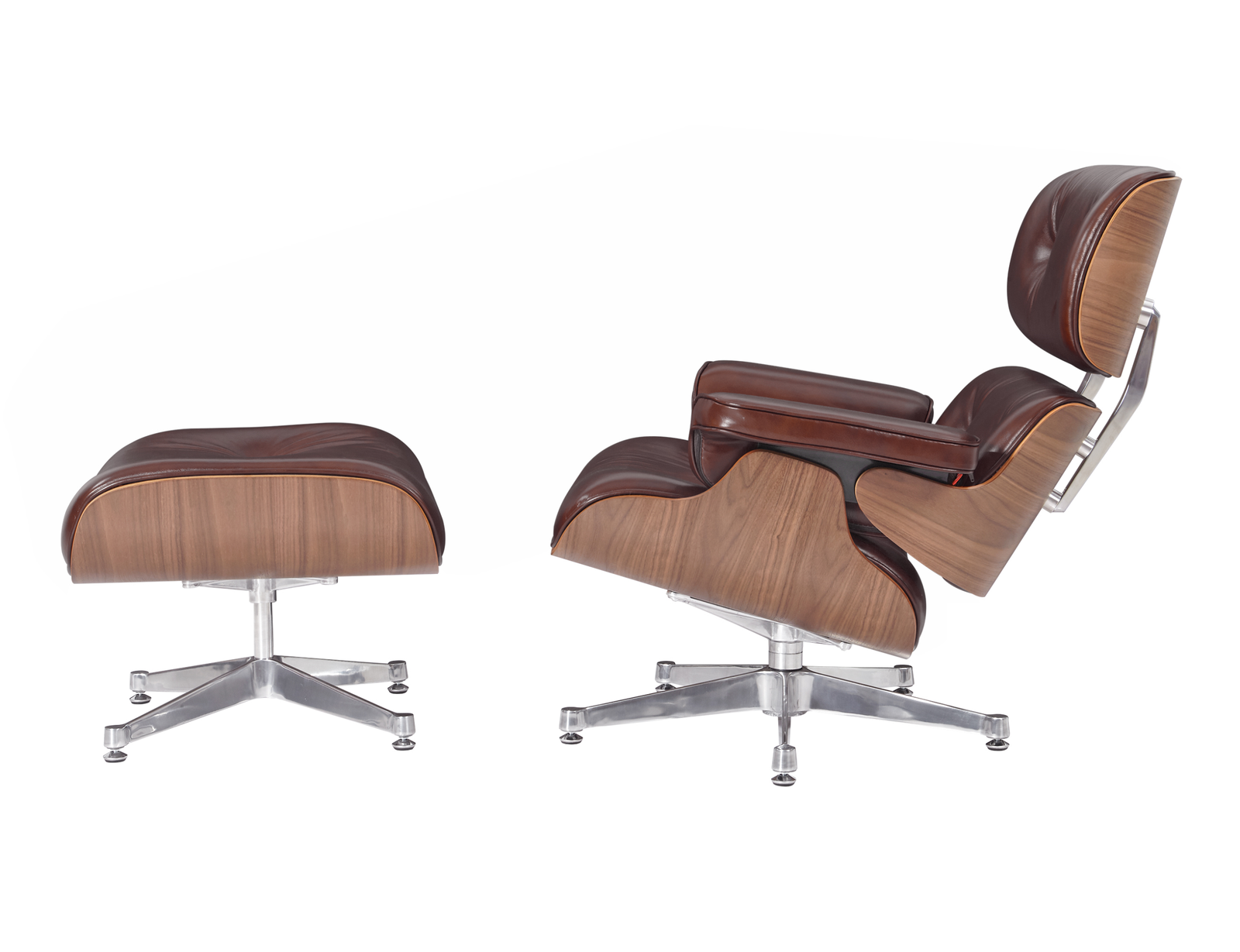
- Black ebony ash – a dark, graphic take on the classic shells.
See the full Eames lounge chair replica collection to compare every leather and veneer.
Follow Sederica in Google
Add us as a preferred source and our buying guides will appear more often in your Google results.
Add as preferred source