TL;DR
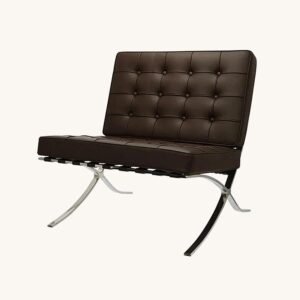
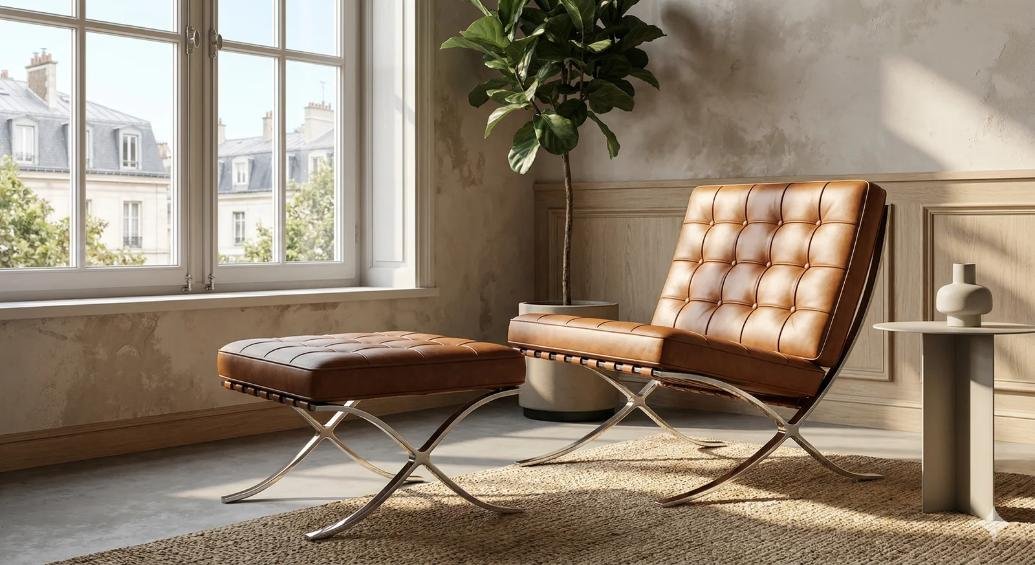
- The Barcelona chair was designed by Ludwig Mies van der Rohe with Lilly Reich in 1929, for the German Pavilion in Barcelona.
- Mies was a German-American architect and one of the founders of modern architecture, known for the phrase “less is more”.
- He was the third and last director of the Bauhaus (1930–1933) before the Nazis forced it to close.
- After emigrating to the US in 1938, he designed landmarks including Crown Hall in Chicago and the Seagram Building in New York.
- His partner Lilly Reich was central to his furniture, though her role was overlooked for decades.
Ask who designed the Barcelona chair and the name that comes back is Ludwig Mies van der Rohe – but that is only part of the answer, and only part of the man. Mies reshaped modern architecture across two continents, coined one of design’s most famous phrases, and built some of the twentieth century’s defining buildings. This is the story of how a stonemason’s son from Aachen became the architect behind the Bauhaus, the Seagram Building, and the Barcelona chair.
Who Designed the Barcelona Chair?
The Barcelona chair was designed by Ludwig Mies van der Rohe in collaboration with Lilly Reich in 1929. The pair created it for the German Pavilion at the 1929 Barcelona International Exposition, where the chair was an integral part of the building.
For most of the last century, the design was credited to Mies alone. That is now recognised as an incomplete picture. Reich worked closely with Mies on both the pavilion and its furniture, and any honest answer to who made the Barcelona chair names both designers. We tell the full story of the chair itself in our Barcelona chair history guide. Here, the focus is on the architect whose name it carries.
From a Stonemason’s Son to Architect: Mies’s Early Life
Ludwig Mies van der Rohe was born Maria Ludwig Michael Mies on 27 March 1886 in Aachen, Germany. His father was a stonemason who owned a small stonecutter’s shop, and the young Mies learned about materials and craft on building sites long before he ever studied design. He never received any formal architectural training.
At fifteen he was apprenticed to local architects, sketching ornament for plasterers. He moved to Berlin and worked for the furniture designer Bruno Paul, then joined the office of Peter Behrens, a leading modern architect. In Behrens’s studio he worked alongside Walter Gropius and Le Corbusier, two men who would also shape modern architecture. Around the age of thirty, having established himself, he added his mother’s maiden name, Rohe, with the aristocratic-sounding Dutch “van der”, to become Mies van der Rohe.
“Less Is More”: The Philosophy That Defined Him
Mies van der Rohe is remembered as much for a phrase as for a building: “less is more”. It captured his belief that architecture should be stripped to its essentials, with nothing added for decoration’s sake. He paired it with a second famous line, “God is in the details”, meaning that in a simple design, every join and material had to be perfect.
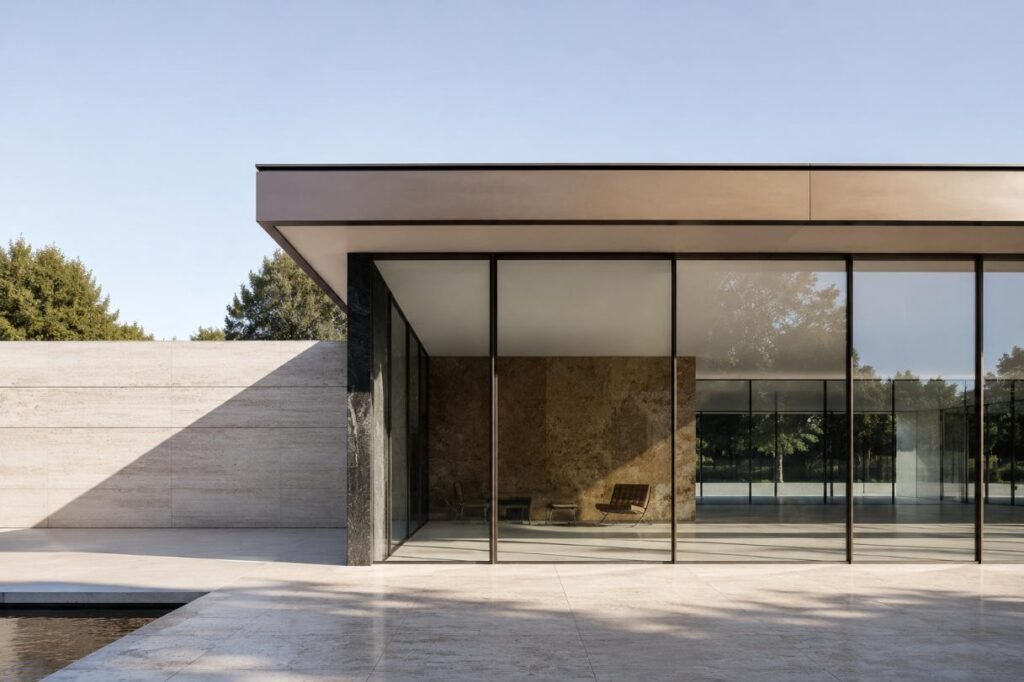
In practice, this meant buildings of steel and glass reduced to what he called “skin and bones” – clean, rectilinear structures with open, flexible interiors he described as “universal space”. This approach became a foundation of the International Style, and it influenced architects around the world for the rest of the century. The same restraint runs through his furniture, including the Barcelona chair, where two clean steel curves do all the work.
Director of the Bauhaus (1930–1933)
In 1930, Mies van der Rohe became the third and final director of the Bauhaus, the ground-breaking German school of modern art, design, and architecture. He was appointed with the backing of its founder, Walter Gropius, and though he was not a natural administrator, he won respect as a demanding and gifted teacher.
The timing was difficult. The school was caught between political attacks from the Nazis outside and unrest among students within. When the Nazi government forced the Bauhaus to close in 1933, Mies tried for a few months to keep it running privately in Berlin, but modern design had no place in Hitler’s Germany. The closure marked the end of one of the most influential design schools in history, and it pushed many of its figures, Mies included, toward emigration.
The Barcelona Pavilion and Lilly Reich
The Barcelona Pavilion of 1929 was Mies van der Rohe’s breakthrough on the world stage, and it was not his work alone. Lilly Reich, a Berlin designer specialising in textiles, furniture, interiors, and exhibitions, was his closest collaborator for more than a decade, from the mid-1920s until 1938. Together they created the pavilion and its furniture, including the Barcelona chair.
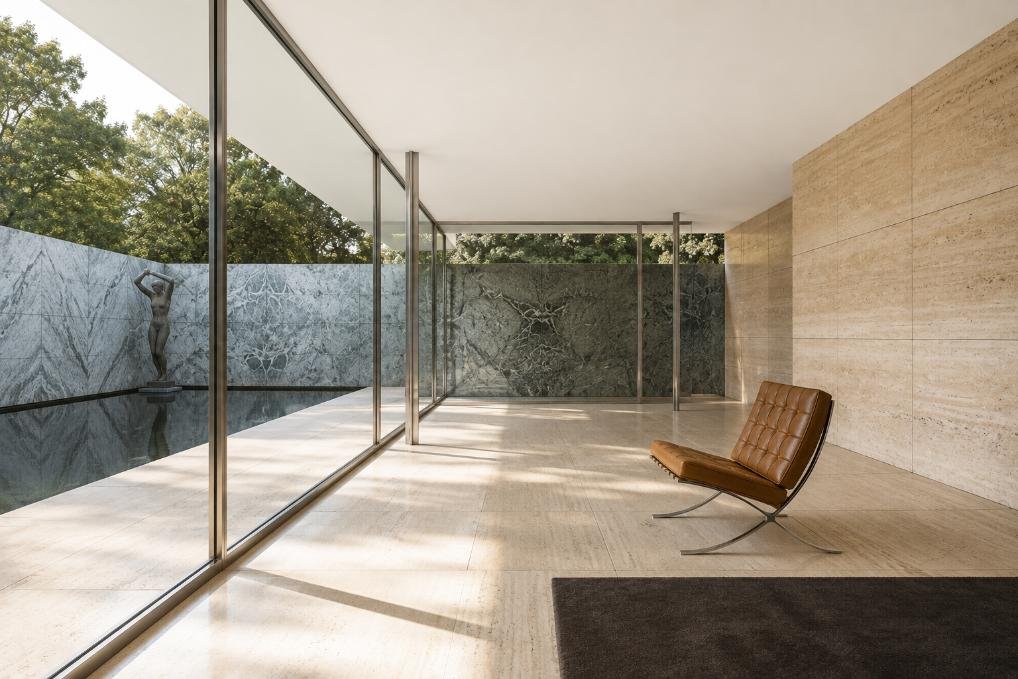
Reich’s contribution was overlooked for decades. Her recognition came only later, through the work of historians who traced her role in designs long credited to Mies alone. There is a sad end to the partnership, too. When Mies emigrated to the United States in 1938, he left Reich behind in Germany. Her career struggled under the Nazi regime, and she died in Berlin in 1947. Crediting her is not a footnote – it is part of telling the story accurately.
A New Life in America: IIT, Crown Hall, and the Seagram Building
Mies van der Rohe emigrated to the United States in 1938 and settled in Chicago, where he took charge of the architecture school at the Armour Institute, renamed the Illinois Institute of Technology (IIT) in 1940. He became an American citizen in 1944 and led the school until 1958, designing much of its campus.
His American work turned his ideas into landmarks. Crown Hall (1956), the IIT architecture building, is often called the clearest expression of his style – a single, column-free glass hall that embodies his idea of universal space. The Seagram Building (1958) in New York, designed with the architect Philip Johnson, is a bronze-and-glass tower on Park Avenue that became a model for the modern skyscraper. Earlier, the Farnsworth House (1951) in Illinois, a glass weekend home for Dr Edith Farnsworth, showed his minimalism at its most radical, and sparked a famous dispute over cost and comfort.
Later Years and Legacy
Mies van der Rohe returned to Germany for one final major work, the Neue Nationalgalerie in Berlin, completed in 1968 – a glass-and-steel gallery that distilled a lifetime of ideas into a single roof over open space. He died in Chicago on 17 August 1969, aged 83.
His influence on modern architecture is hard to overstate. The steel-and-glass towers that fill city centres around the world trace back in part to his “skin and bones” approach. His furniture has proved just as lasting: the Barcelona chair, designed with Lilly Reich, is still made under licence by Knoll and remains one of the most recognised pieces of modern design. For the full story of that chair, see our Barcelona chair history guide.
Mies van der Rohe’s Other Famous Furniture
The Barcelona chair is the most famous piece Mies van der Rohe designed, but it was not the only one, and most of his furniture came from the same partnership with Lilly Reich.
The Brno chair, created in 1930 for the Tugendhat House in the Czech city of Brno, is a cantilevered chair whose single curved frame supports the sitter without back legs. The MR chair, from the late 1920s, used the same cantilever idea with a tubular steel frame and a caned or leather seat. The Tugendhat chair, also from the villa, is a lower lounge version of the Barcelona. All of these share the qualities that define his work: clean lines, exposed steel, and comfort achieved through structure rather than padding. They remain in production under licence today, alongside the Barcelona pieces.
The Buildings That Defined Modern Architecture
To understand why Mies matters, it helps to see his buildings as a single arc from Europe to America. Each one pushed his ideas of steel, glass, and open space a little further.
In Europe, the Barcelona Pavilion (1929) and the Tugendhat House (1930) established his reputation, both designed with Lilly Reich. In America, the Farnsworth House (1951) reduced a home to a glass box on steel legs, the 860-880 Lake Shore Drive apartments (1951) brought his approach to the city skyline, and the Seagram Building (1958) set the template for the modern office tower. He closed his career back in Germany with the Neue Nationalgalerie in Berlin (1968), a single glass hall under a vast steel roof. Together these buildings show how far a simple idea, carried out with care, could reach.
Mies van der Rohe’s Awards and Honours
By the end of his life, Mies van der Rohe was recognised as one of the most important architects of the twentieth century, and he received the highest honours his field could offer.
He was awarded the Royal Gold Medal by the Royal Institute of British Architects in 1959, the Gold Medal of the American Institute of Architects in 1960, and the Presidential Medal of Freedom, the United States’ highest civilian honour, in 1963. His influence continued long after his death in 1969, shaping generations of architects and the steel-and-glass cities they built.
Frequently Asked Questions
Who designed the Barcelona chair?
The Barcelona chair was designed by Ludwig Mies van der Rohe in collaboration with Lilly Reich in 1929, for the German Pavilion at the Barcelona International Exposition. Reich’s role was long overlooked but is now recognised.
Was Mies van der Rohe the director of the Bauhaus?
Yes. Mies van der Rohe was the third and final director of the Bauhaus, from 1930 until the Nazi government forced the school to close in 1933. He briefly tried to continue it privately in Berlin.
What is Mies van der Rohe famous for?
He is famous for the phrase “less is more” and for pioneering modern steel-and-glass architecture. His best-known works include the Barcelona Pavilion and chair, the Seagram Building, Crown Hall, and the Farnsworth House.
What does “less is more” mean?
“Less is more” was Mies van der Rohe’s design philosophy: architecture should be reduced to its essentials, with nothing added for decoration. He paired it with “God is in the details”, meaning every element of a simple design had to be perfect.
Did Mies van der Rohe design furniture?
Yes. With Lilly Reich, he designed several classic pieces, including the Barcelona chair, the Brno chair, and the Tugendhat chair. His furniture applies the same clean, minimal approach as his buildings.
When did Mies van der Rohe die?
Ludwig Mies van der Rohe died in Chicago on 17 August 1969, at the age of 83. He had been diagnosed with cancer in 1966 and died of pneumonia.
-
Barcelona Chairs, Barcelona Chair with Ottoman
Original price was: €979,00.€629,00Current price is: €629,00. Add to basket -
Barcelona Chairs, Barcelona Chair with Ottoman
Original price was: €979,00.€629,00Current price is: €629,00. Add to basket -
Barcelona Chairs, Barcelona Chair with Ottoman
Original price was: €979,00.€629,00Current price is: €629,00. Add to basket




Bring a Modern Icon Home
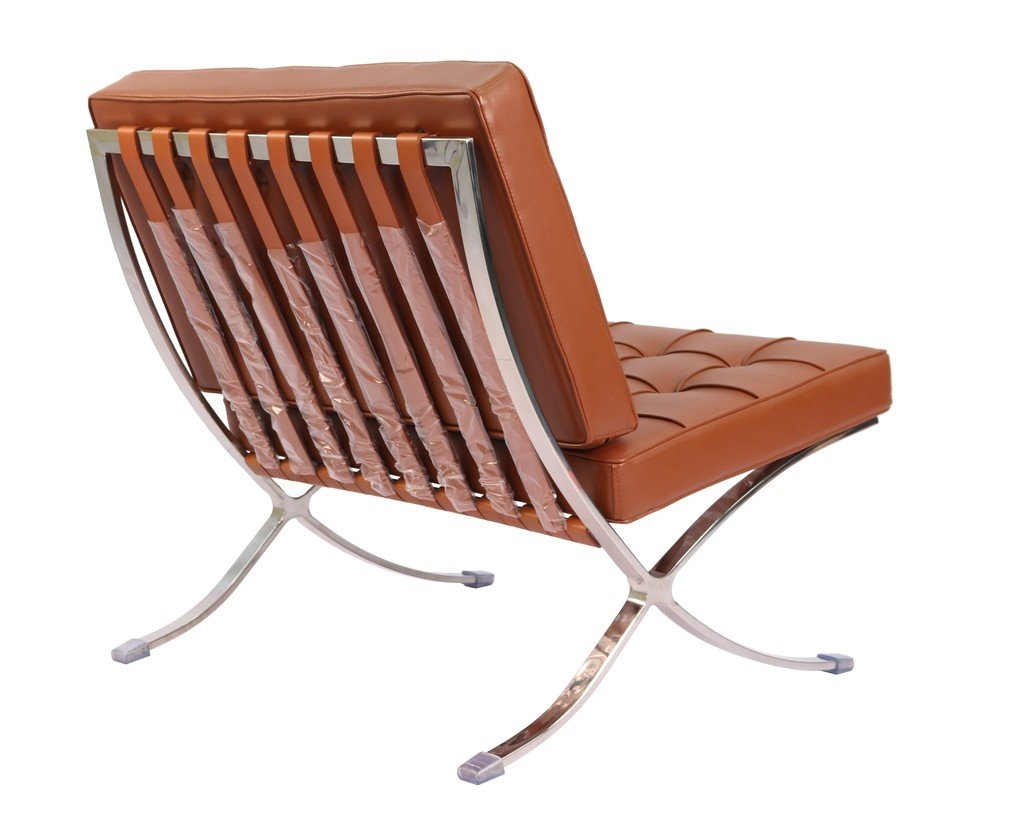
Mies van der Rohe designed the Barcelona chair to be timeless, and it still is. If you love the design but not the licensed price, a faithful Mies van der Rohe chair replica gives you the same clean steel frame and tufted leather for far less. Explore our Barcelona chair collection to see the finishes available.
Follow Sederica in Google
Add us as a preferred source and our buying guides will appear more often in your Google results.
Add as preferred source