
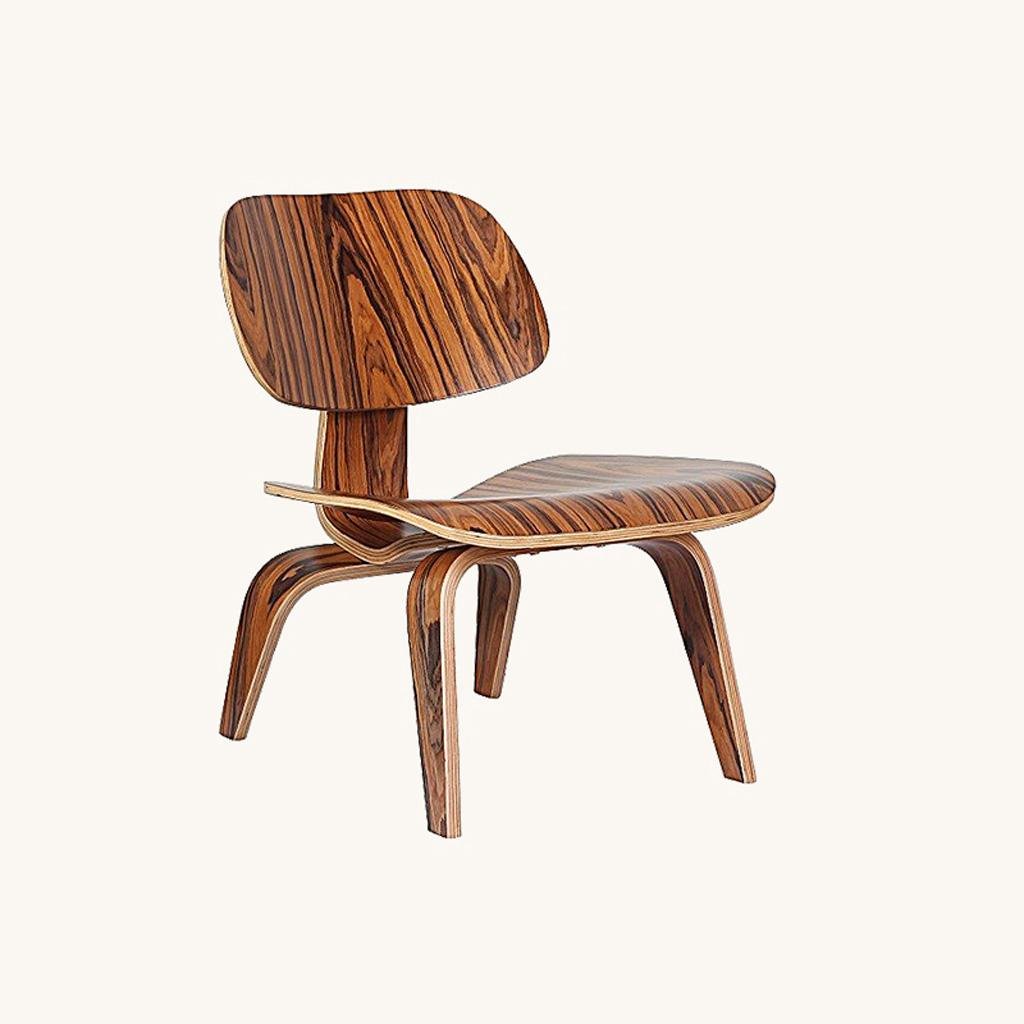
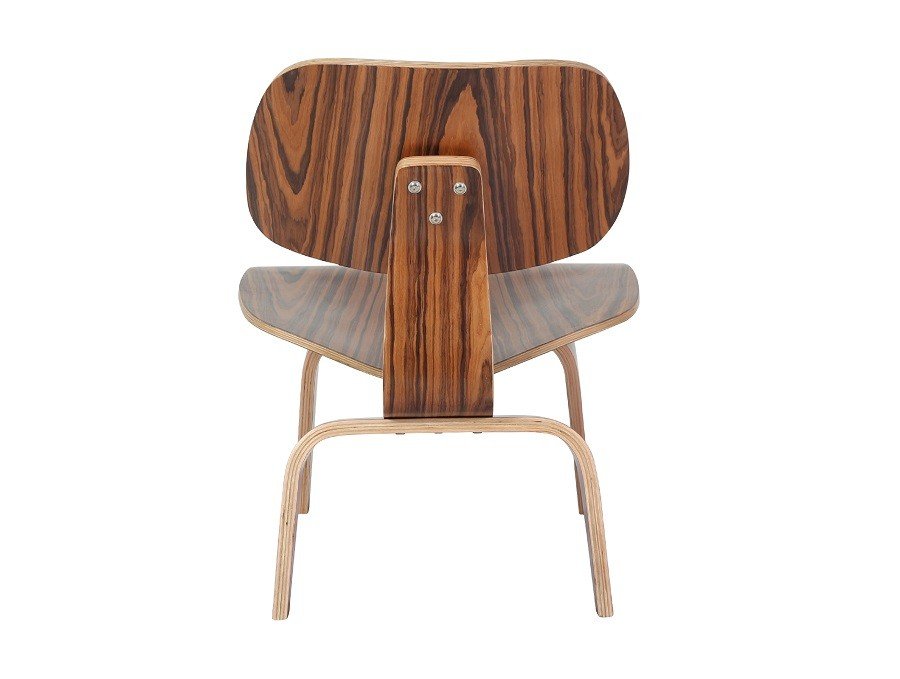
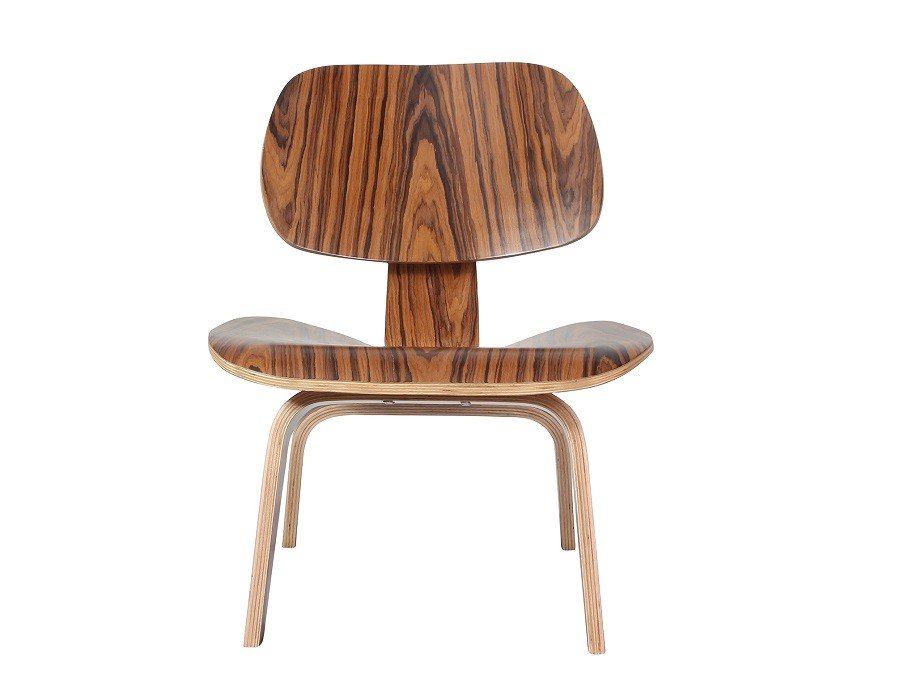
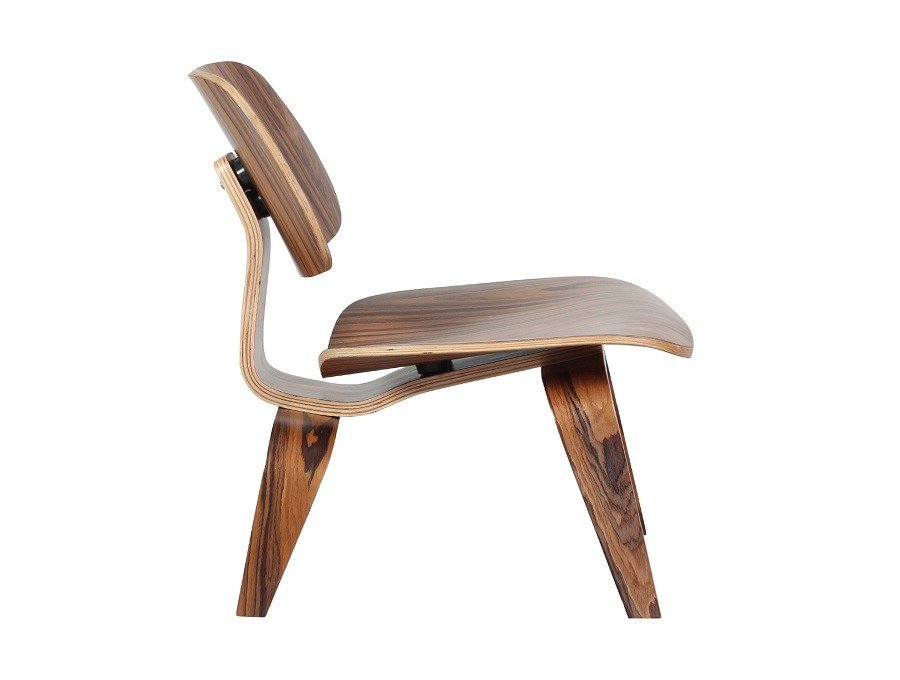
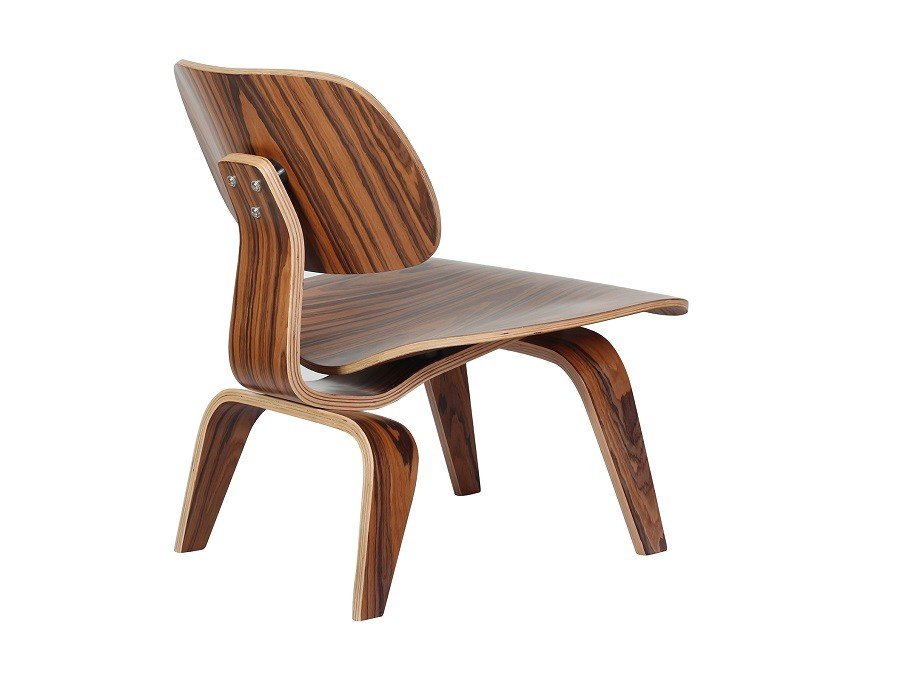
This is our Eames LCW rosewood reproduction: a low plywood lounge chair with deep, striped rosewood veneer on every moulded part, legs included. Sederica makes it after the lounge chair Charles and Ray Eames developed in the mid-1940s. Rubber shock mounts let the seat and back give a little as you lean in. It suits a reading corner, a bedroom or a living room where you want dark, warm wood without a bulky armchair.
Why choose rosewood for an LCW chair replica
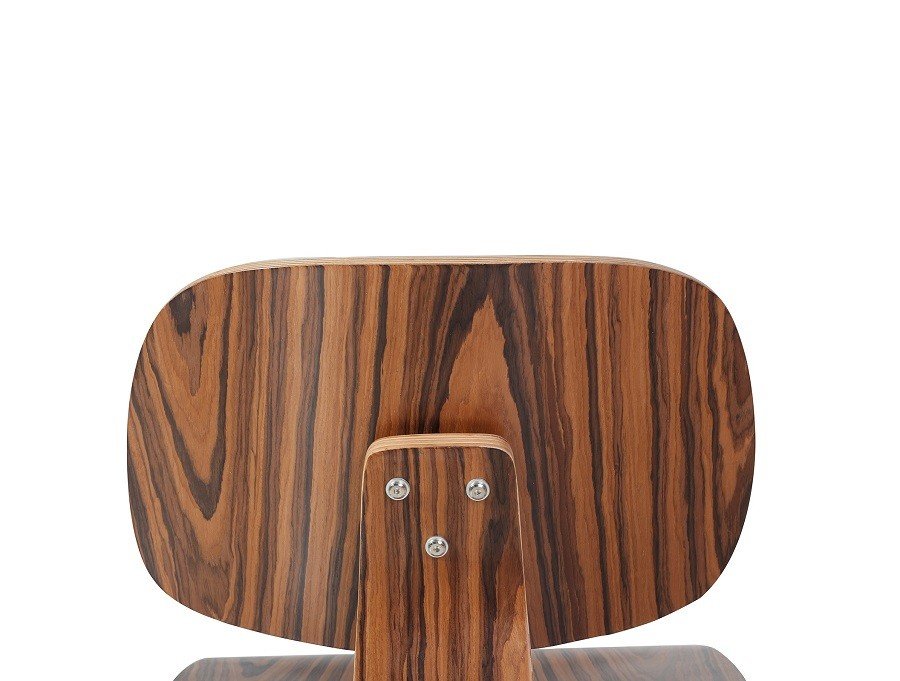
Rosewood is the darkest and most figured of our four LCW finishes. The veneer runs in tight stripes of reddish brown and near-black, so each chair shows its own pattern across the backrest and seat. No two backs look exactly alike.
Across much of Europe this wood is sold as palisander: Palisander in German, palissandre in French. If you know the rosewood sideboards and cabinets of 1960s Scandinavian design, this chair sits in the same colour family. It pairs well with teak, walnut, brass, and deep green or rust textiles.
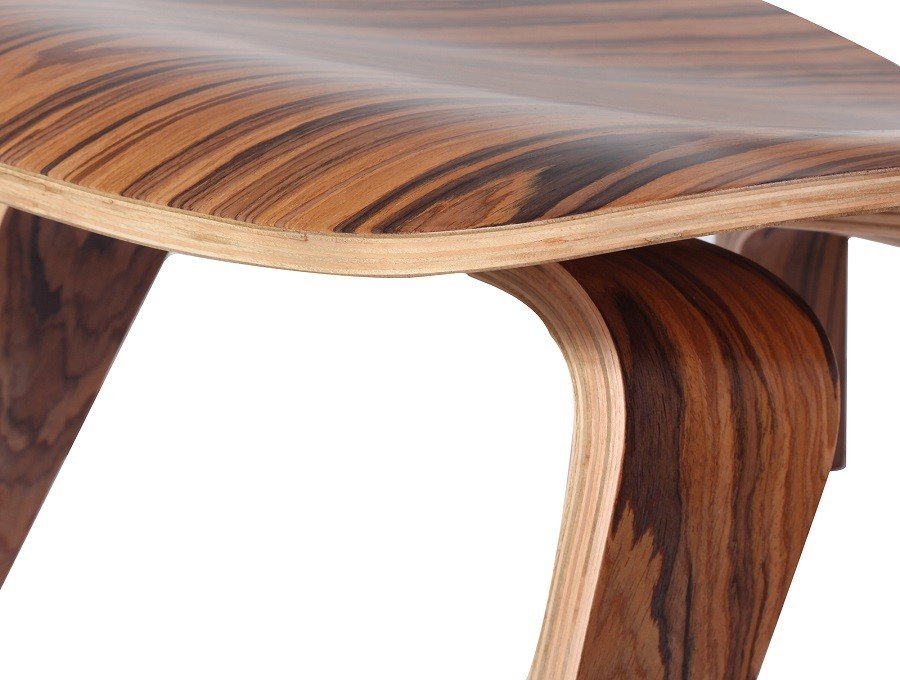
Look at the edges and you will see thin, pale bands of laminated plywood. They are left exposed, just as on the 1940s chair. Against dark rosewood they read as fine light lines tracing every curve, a detail that is far quieter on lighter woods.
Rosewood also has history on this chair. Some early LCWs from the late 1940s were veneered in rosewood, and those examples are now among the rarest on the vintage market.
How this plywood lounge chair replica is built
The chair is made from five moulded plywood parts: the seat, the backrest, the curved spine that joins them, and two leg frames. Each part is pressure-formed, which bends thin layers of wood into curves that solid timber cannot hold. The rosewood veneer is bonded to the outer faces.
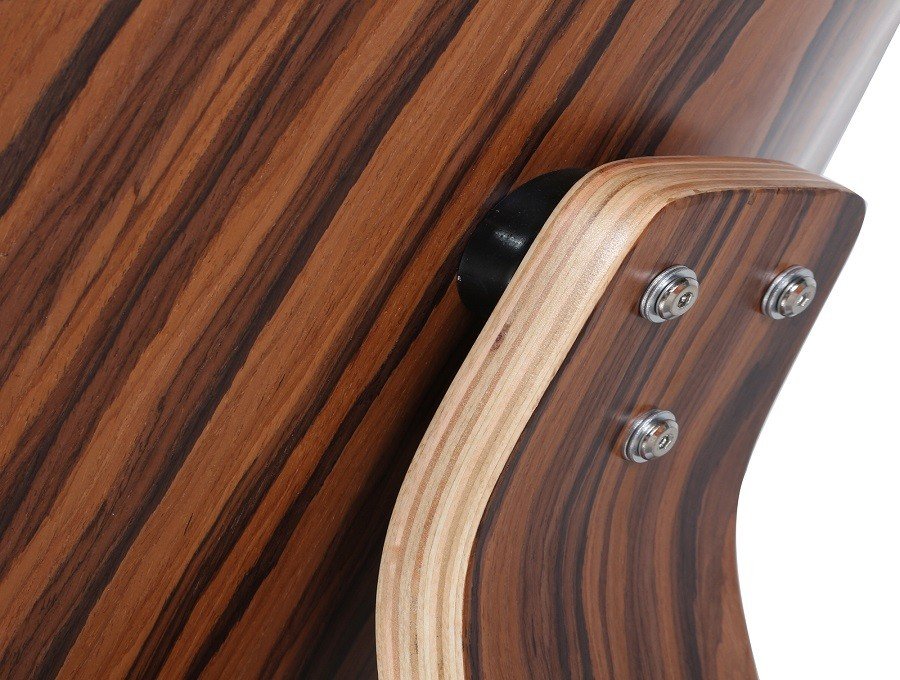
The seat and backrest sit on rubber shock mounts instead of being screwed straight to the frame. When you sit, the back gives slightly and settles as you shift your weight. It is a small movement, but it makes an all-wood chair feel much less rigid.
At 7 kg, the chair is light enough to carry from room to room with one hand. That makes it easy to pull closer to a fire or a window when you want to read.
Key features and what they mean for you
| Feature | What it means for you |
|---|---|
| Figured rosewood veneer | Dark, striped grain that gives a plain room a focal point |
| Five-piece moulded plywood | Curves shaped to the body, so no cushion is needed |
| Rubber shock mounts | A gentle flex in the seat and back that softens each movement |
| Low lounge-height seat | A relaxed, laid-back posture for reading or conversation |
| 7 kg net weight | Easy to move, clean around or carry upstairs |
The design behind the LCW reproduction
Charles and Ray Eames spent the early 1940s learning to bend plywood into compound curves. They started in their Los Angeles flat, then moved on to moulded leg splints for the US Navy. Their earlier one-piece shells cracked at the tightest bends.
The fix was to split the chair into a separate seat and back, joined by a spine and cushioned with rubber mounts. The design went into production in 1946 as the LCW, short for Lounge Chair Wood. In 1999, Time magazine named the Eames moulded plywood chair the best design of the 20th century.
You can see an example in the collection of the Victoria and Albert Museum in London. Some replica listings date this chair to 1956, but that is the year of the larger leather lounge chair. The LCW came about ten years earlier, and you can read more about both designs on our Charles and Ray Eames designer page.
Is the rosewood LCW right for your room?
This chair suits you if you want a sculptural accent chair in dark wood that needs no upholstery. It works as a reading chair beside a lamp, a bedroom chair, a pair either side of a low coffee table, or a single piece in a study or hallway. Rosewood looks best against white, cream or light grey walls, where the grain stands out.
It may not suit you if you want somewhere to spend long evenings in front of the television. There is no padding, and the low seat puts your knees higher than a sofa does, which some people find harder to rise from. It is also not a desk or dining chair, because the seat sits well below a standard table.
If your room already has plenty of dark furniture, the same shape in a lighter wood may balance it better.
Rosewood, walnut, ash or black: choosing your LCW
| Finish | Tone | Grain | Works best with |
|---|---|---|---|
| Rosewood (this chair) | Dark reddish brown | Bold, tight stripes | Light walls, teak, brass, rich textiles |
| Walnut | Warm mid-brown | Soft and wavy | Oak floors, neutral rooms |
| Ash | Pale and natural | Open and straight | Scandinavian and light interiors |
| Black stained | Solid black | Muted by the stain | Monochrome and graphic rooms |
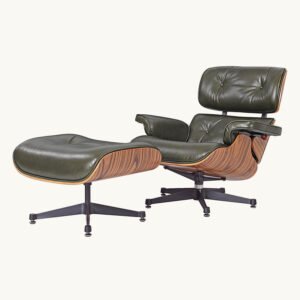
All four share the same moulded plywood form, so the choice is about colour. Compare the walnut version, the ash version and the black stained version, or browse the full plywood LCW collection. If you would prefer a padded chair with a footstool, our Eames-style lounge chair replicas are the upholstered alternative.
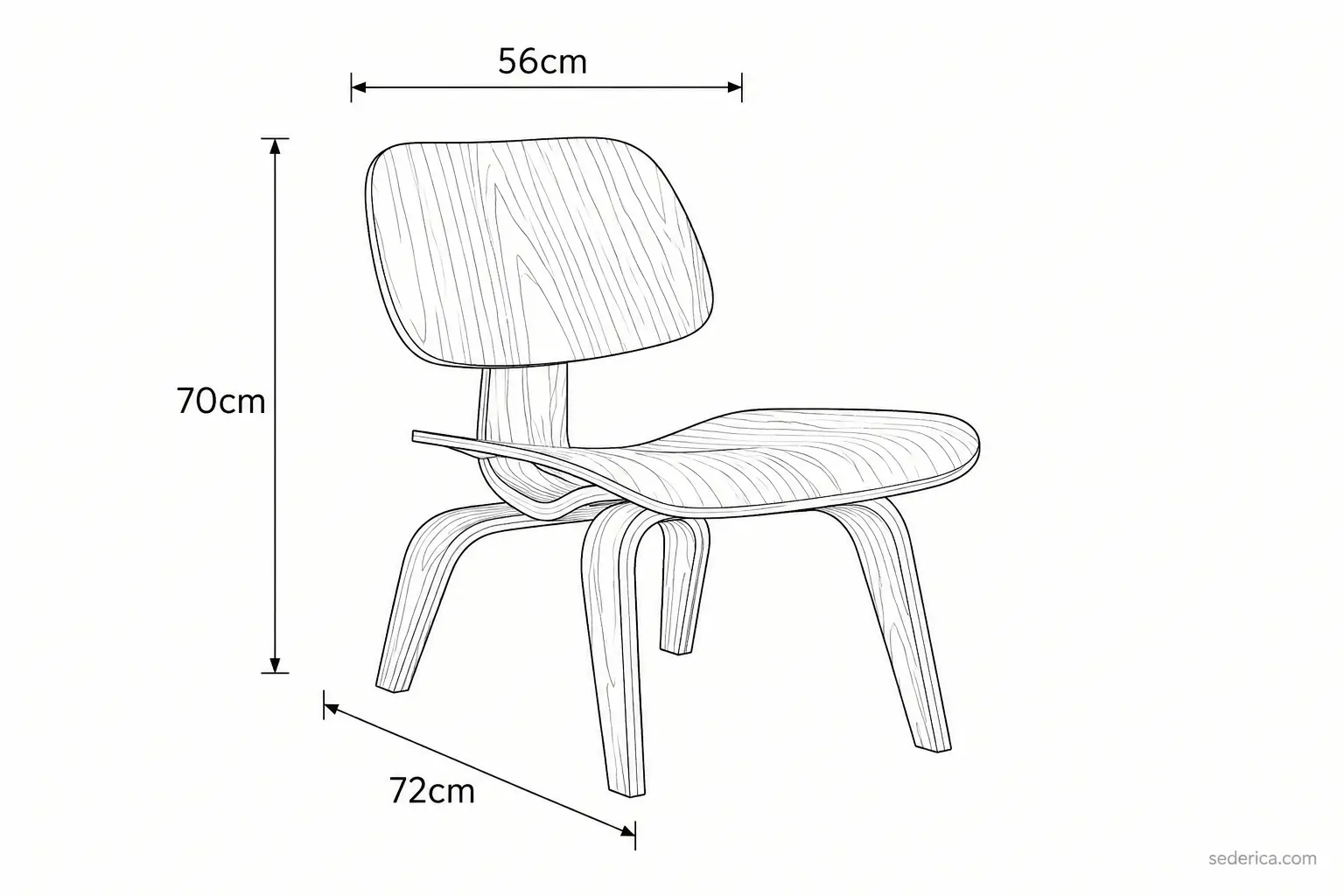
Eames LCW Chair Dimensions
| Feature | Measurement |
|---|---|
| Chair Width | 56 cm |
| Chair Depth | 72 cm |
| Chair Height | 70 cm |
| Net Weight | 7 kg |
Caring for rosewood veneer
Dust the chair weekly with a dry microfibre cloth, moving along the grain. Wipe spills straight away with a cloth dampened in plain water, then dry the surface. Avoid silicone sprays, wax polishes and abrasive cleaners, and keep them off the rubber mounts.
Like any natural veneer, rosewood shifts in tone under strong sunlight over time, so keep it back from a bright south-facing window where you can. Place it away from radiators as well. When moving the chair, lift it by the seat rather than the backrest to keep strain off the shock mounts, and check the screws are snug after the first few weeks.
Why buy from Sederica
We call this chair what it is: an Eames-style reproduction, designed and made for Sederica. Every figure on this page, from the 7 kg weight to the 56 cm width, comes from our own product specification rather than borrowed claims. See our Legal Disclaimer for terms.
Frequently asked questions
Is this real rosewood or a printed finish?
It is rosewood veneer, a thin sheet of real wood bonded over moulded plywood, not a printed foil. Because the veneer is natural, the stripe pattern and colour vary a little from chair to chair. The plywood core shows as pale bands along the edges, which is normal for this design. If you want a closer look at the grain before ordering, email us and we can send extra photos.
How comfortable is the LCW without a cushion?
More comfortable than most people expect. The seat and back are moulded to follow the curve of your body, and the rubber shock mounts let the backrest move slightly as you shift. It is best for sitting sessions of an hour or two, such as reading or conversation. If you want to sink in for a whole evening, an upholstered lounge chair will suit you better.
Will the Eames LCW chair replica fit a small room?
Usually, yes. The chair measures 56 cm wide, 72 cm deep and 70 cm high, which is smaller than most armchairs. Allow some extra space in front for your legs, since the low seat encourages a stretched-out posture. At 7 kg it is also easy to move aside when you need the floor space.
How is this different from an Eames lounge chair replica?
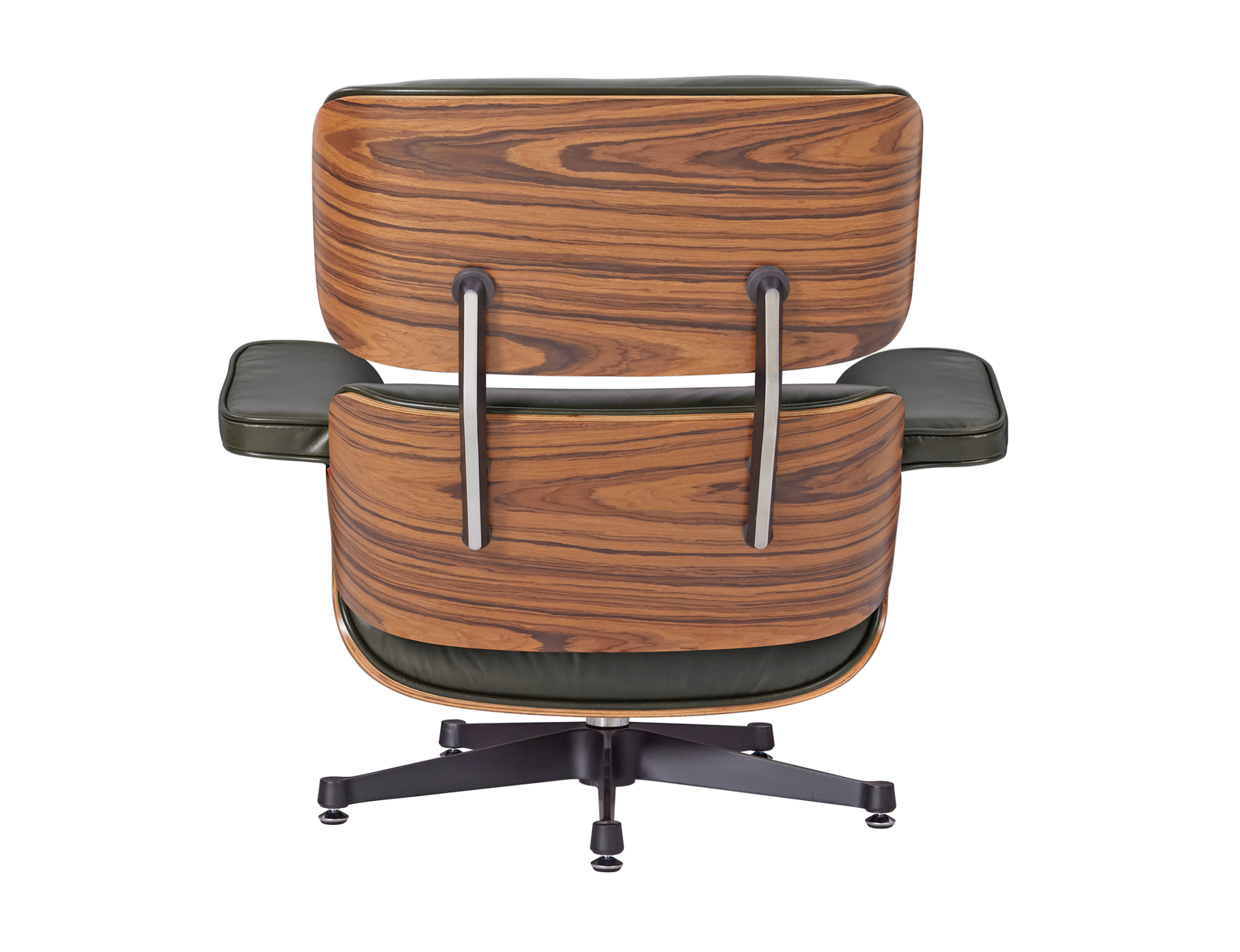
They are two separate designs. The LCW is an all-wood chair from 1946 with no upholstery and no swivel. The Eames lounge chair from 1956 is larger, has leather cushions and a swivel base, and usually comes with an ottoman. Choose the LCW for a lighter, more sculptural piece, and the lounge chair for deep, padded comfort.
What does “replica” mean for this chair?
It means Sederica makes the chair after the Eames LCW design. It is an Eames-style reproduction, not a chair produced by the Eames family or their partners. We describe our materials and measurements honestly so you know exactly what you are buying. Our Legal Disclaimer explains the terms in full.



Reviews
There are no reviews yet.