TL;DR
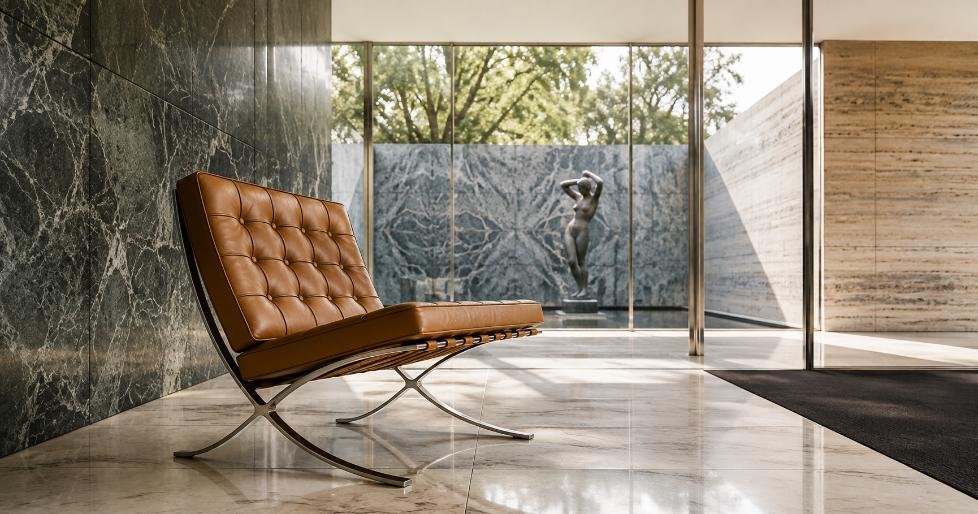
- The Barcelona chair was designed in 1929 by Ludwig Mies van der Rohe with Lilly Reich.
- It was created for the German Pavilion at the 1929 Barcelona International Exposition, where it was part of the building itself.
- Because King Alfonso XIII was expected at the opening, it was conceived as a monumental, ceremonial seat – though the idea that it was purely a royal throne is partly a myth.
- Only two chairs were made for the pavilion, and by most accounts the king never actually sat in one.
- The licensed original has been made by Knoll since 1953.
When was the Barcelona chair designed? The short answer is 1929. The fuller story runs through a world’s fair, a landmark modernist building, and a Spanish king who never sat down. This guide gives the date, the exposition that produced the chair, and the truth behind its royal reputation.
When Was the Barcelona Chair Designed?
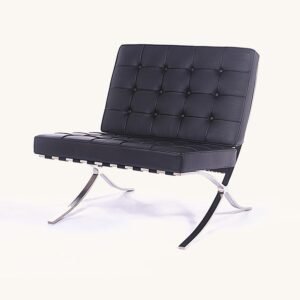
The Barcelona chair was designed in 1929 by Ludwig Mies van der Rohe in collaboration with Lilly Reich. The pair created it for the German Pavilion at the 1929 Barcelona International Exposition, the world’s fair that also gave the chair its name.
So the Barcelona chair year most people are looking for is 1929. That is when the chair was designed, built, and first shown – the moment it became the design the world knows. Reich’s role in it was overlooked for decades, but she is now recognised as central to the work, so the honest answer credits both designers.
The 1929 Barcelona International Exposition
The chair takes its name from the 1929 Barcelona International Exposition, a world’s fair held in the Spanish city. Germany asked Mies van der Rohe to design its national pavilion for the event, and he and Lilly Reich created what became known as the Barcelona Pavilion – a low, open building of marble, glass, and steel now considered a landmark of modern architecture.
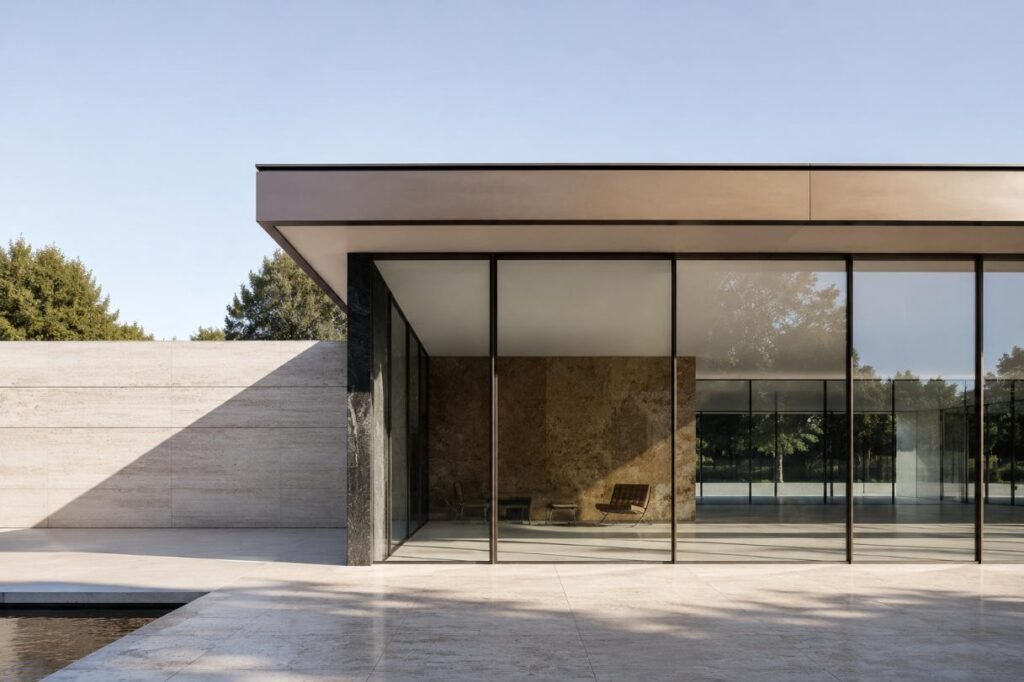
The chair was not an afterthought placed inside a finished room. Mies designed the pavilion as a single, unified work, and the chairs were fixed elements of it. In other words, the Barcelona chair was born as part of a building in 1929 before it became a piece of furniture in its own right. You can read the full story of the pavilion in our Barcelona chair history guide.
A Chair for a King: The 1929 Story
The most repeated story about the 1929 chair is that it was designed as a throne for Spanish royalty. King Alfonso XIII and Queen Victoria Eugenia were expected to attend the pavilion’s opening, and Mies wanted seating worthy of the moment, saying the design had to be monumental and that “you just couldn’t use a kitchen chair”.
The truth is more interesting than the legend. Knoll, the chair’s official maker, notes that the “fit for a king” remark gave rise to the misconception that the Mies 1929 chair was designed purely as a royal object – an idea largely discredited by scholars. The chairs were first and foremost organisational elements of the pavilion, only two were made, and by most accounts King Alfonso XIII never actually sat in the modern throne created for him. The royal story is true in spirit, but the chair was always more architecture than monarchy.
What Happened to the Chair After 1929
The Barcelona Pavilion stood for only about seven months before it was demolished in 1930. It was faithfully rebuilt on its original site in 1986 and can be visited today, but the chair outlived the building on its own.
Production continued after the exposition, first through Berlin metal workshops. In 1953, Mies granted the American company Knoll exclusive rights to produce and sell the chair, and Knoll has made it ever since. Nearly a century after 1929, the design remains in demand, which is why so many people look for a faithful reproduction rather than the licensed original.
Frequently Asked Questions
When was the Barcelona chair designed?
The Barcelona chair was designed in 1929 by Ludwig Mies van der Rohe with Lilly Reich, for the German Pavilion at the 1929 Barcelona International Exposition.
Who designed the Barcelona chair in 1929?
It was designed by Ludwig Mies van der Rohe in collaboration with Lilly Reich. Mies was a German architect and later director of the Bauhaus, and Reich was his creative partner, whose role in the design is now recognised. You can read more in our Mies van der Rohe biography.
Why is it called the Barcelona chair?
It is named after the 1929 Barcelona International Exposition, where it was first shown in the German Pavilion designed by Mies van der Rohe and Lilly Reich.
Was the Barcelona chair really designed for the king?
It was conceived as a monumental, ceremonial seat because King Alfonso XIII was expected at the pavilion’s opening. However, scholars have largely discredited the idea that it was designed purely as a royal throne, and by most accounts the king never actually sat in it.
Is the Barcelona chair still made?
Yes. Knoll has produced the licensed original since 1953, when Mies van der Rohe granted the company exclusive rights. Many companies also make reproductions of the design.
What year was the Barcelona chair made?
The Barcelona chair was made in 1929, the same year it was designed, for the German Pavilion at the Barcelona International Exposition. Only two were built for the pavilion, and wider production followed later.
What is the Barcelona chair based on?
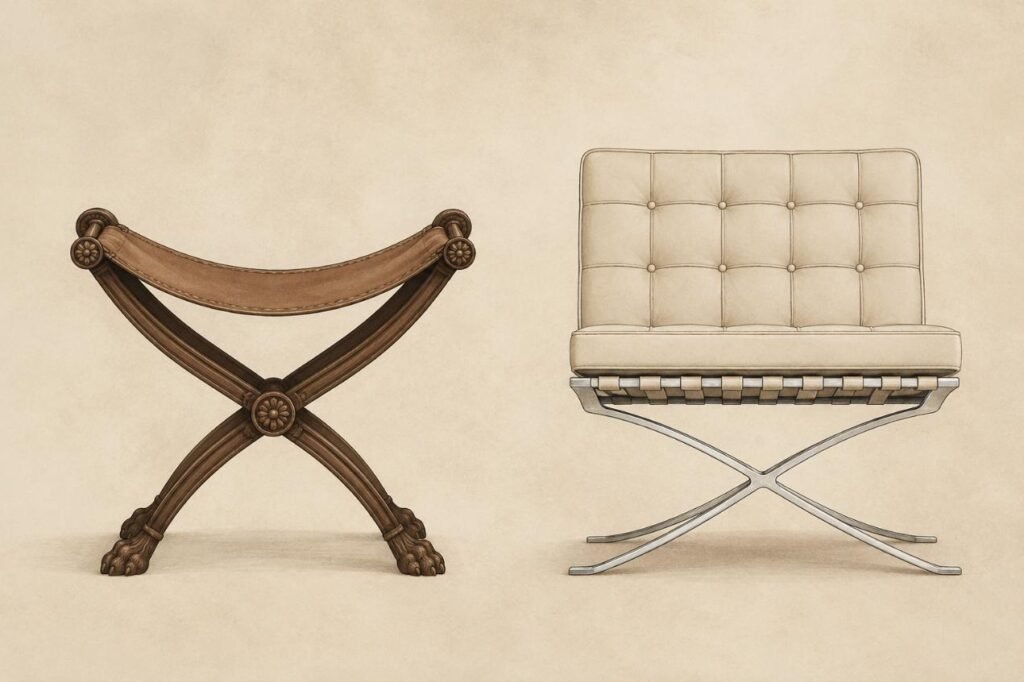
Its X-shaped frame is based on ancient folding chairs, especially the Roman curule chair used by magistrates as a seat of authority. Mies van der Rohe and Lilly Reich turned that ancient shape into a clean, modern design in steel and leather.
Own the 1929 Design for Less
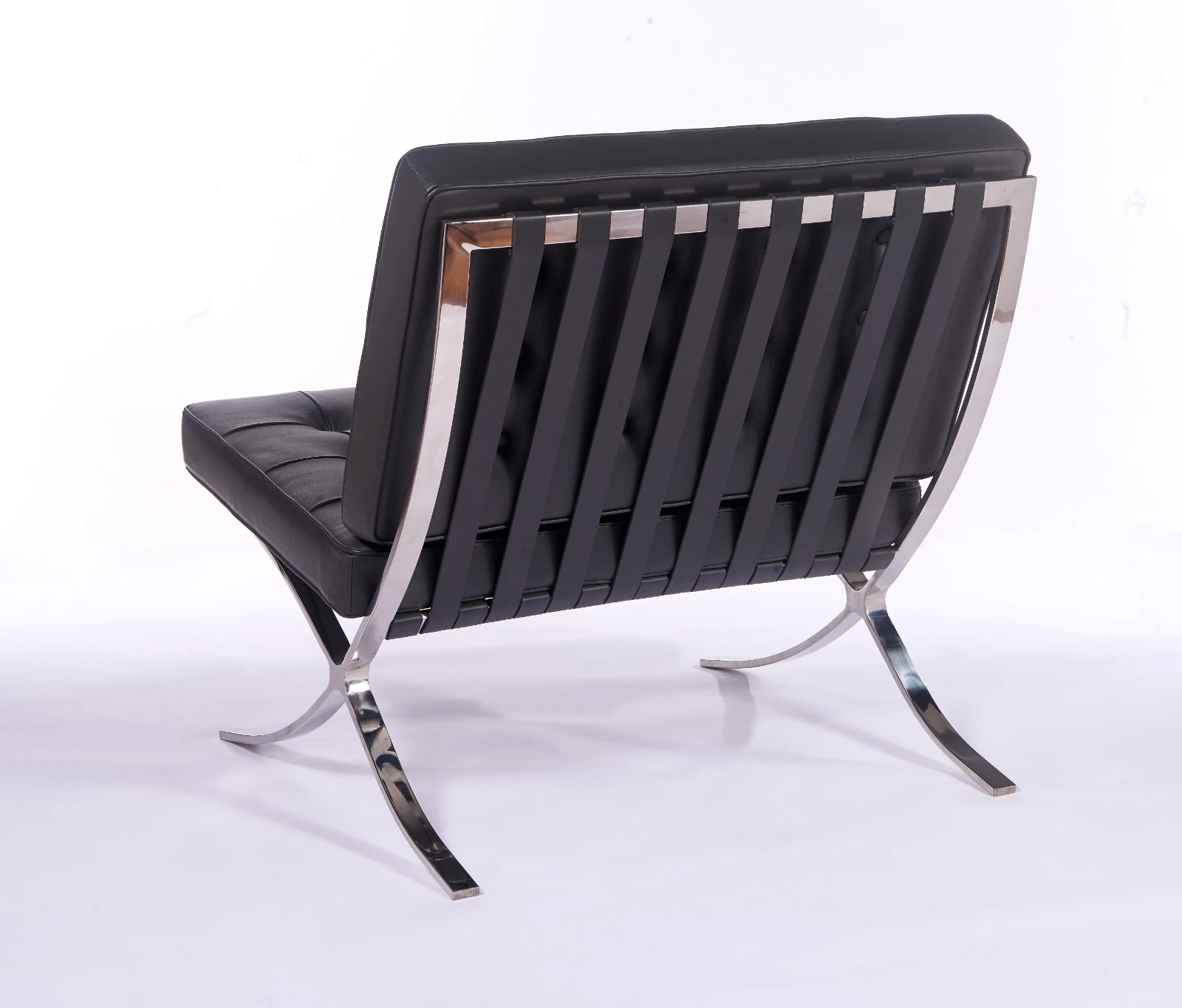
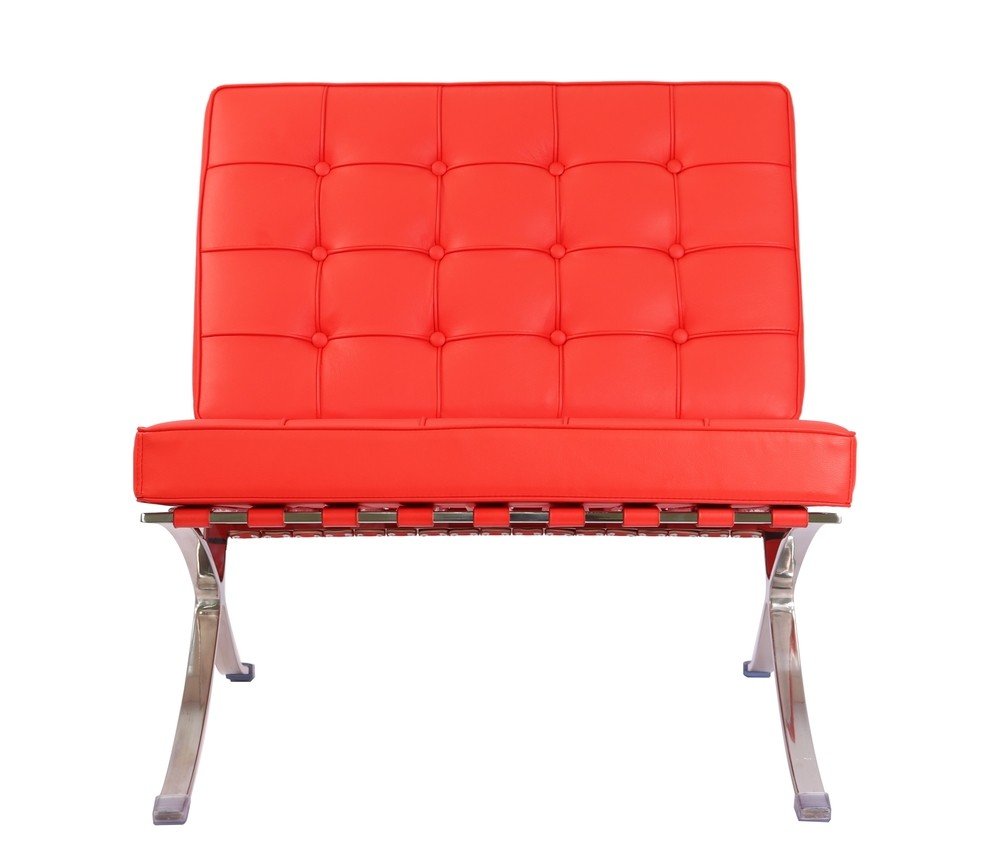
The 1929 Barcelona chair is a piece of design history, though the licensed Knoll version runs into the thousands. Our Barcelona-style reproductions capture the same clean steel frame and tufted leather for far less. See the Barcelona chair collection, or our dedicated Mies van der Rohe chair replica to compare finishes.
-
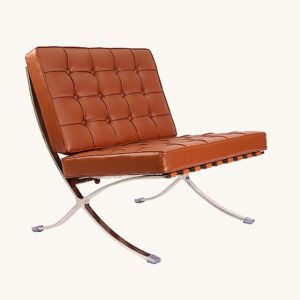
Barcelona Chair Replica, Single Chair Replica
Original price was: €749,00.€445,00Current price is: €445,00. Add to basket -
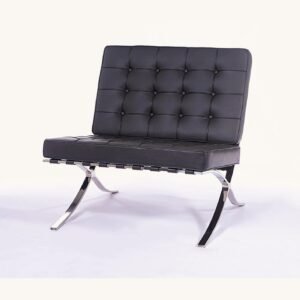
Barcelona Chair Replica, Single Chair Replica
Original price was: €749,00.€435,00Current price is: €435,00. Add to basket -
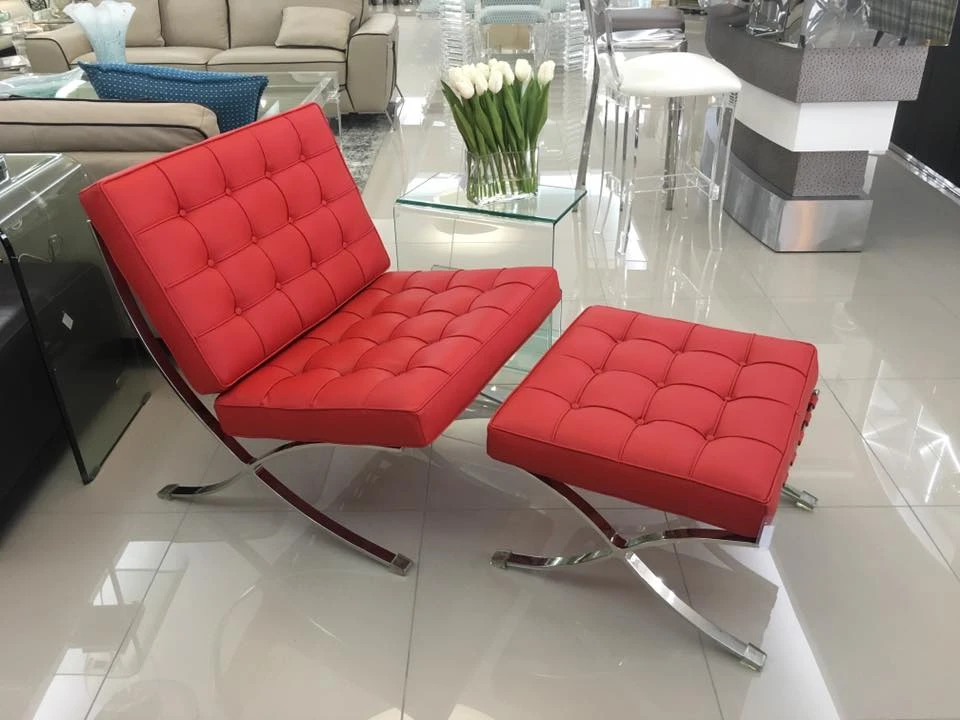
Barcelona Chair Replica, Barcelona Chair with Ottoman
Original price was: €979,00.€629,00Current price is: €629,00. Add to basket

Follow Sederica in Google
Add us as a preferred source and our buying guides will appear more often in your Google results.
Add as preferred source