TL;DR
- The LC4 chaise longue was designed in 1928 by Le Corbusier, Pierre Jeanneret, and Charlotte Perriand – three designers, not one.
- Le Corbusier called it the “relaxing machine” because its curved frame follows the body’s natural resting posture.
- Its tubular steel cradle slides freely on a separate base, holding any angle by friction alone, with no mechanism.
- It was first shown at the 1929 Salon d’Automne in Paris, where its machine-like look divided opinion.
- The licensed original has been made by Cassina since 1965. A quality reproduction offers the same design for far less.
The LC4 chaise longue is one of the most recognised objects in modern design, but its history is often reduced to a single famous name. In truth, the LC4 chaise lounge history belongs to three designers, a Paris salon, and an idea that furniture could be engineered around the human body. This guide covers who designed the LC4, how its clever sliding frame works, and how it became a lasting icon.
The LC4 Chaise Longue: History and Design
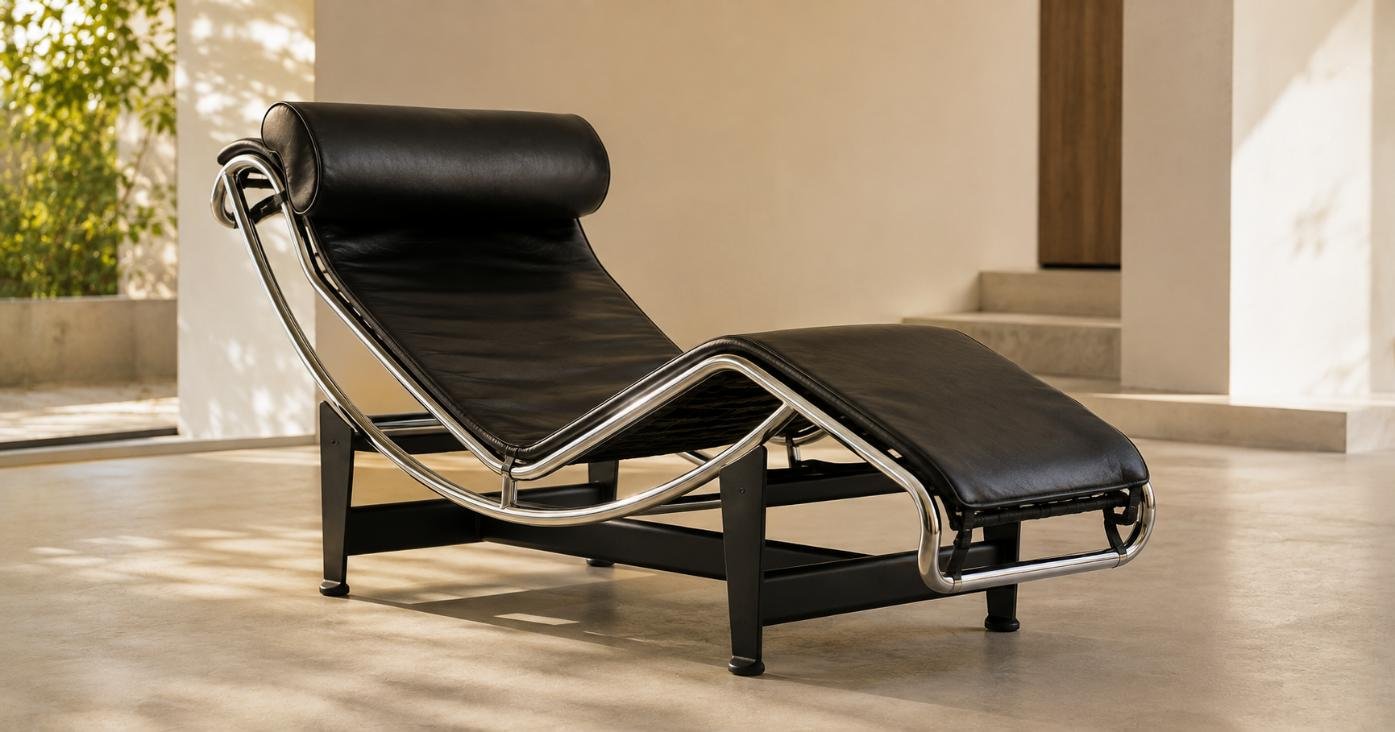
The LC4 chaise longue was designed in 1928 by Le Corbusier, Pierre Jeanneret, and Charlotte Perriand. It was originally called the B306, and its formal name is the “chaise longue à réglage continu” – the chaise longue with continuous adjustment. The name most people know it by, LC4, came later from its manufacturer.
The LC4 1928 design was part of a collection of tubular steel furniture the trio created together. It broke sharply with tradition: instead of a heavy upholstered lounger, it offered a thin steel cradle shaped to the body. You will see the piece written as both “chaise longue”, the correct French, and “chaise lounge”, the common English version – our short guide on “lounge” or “longue” explains the difference.
Who Designed the LC4? Three Names, Not One
The LC4 was designed by three people: Le Corbusier, his cousin Pierre Jeanneret, and Charlotte Perriand. For decades the design was credited to Le Corbusier alone, but that is now recognised as unfair to the two collaborators who did much of the work.
Pierre Jeanneret was Le Corbusier’s cousin and lifelong partner, sharing his Paris studio from 1922. Charlotte Perriand was the designer at the centre of the furniture. When she first sought work at Le Corbusier’s atelier in 1927, he dismissed her with a now-infamous sexist remark. Months later, after seeing her steel-and-glass installation at the Salon d’Automne, he changed his mind and hired her to lead interiors and furniture. She prototyped the LC4, and it was Perriand who famously posed reclining on it in the photograph that defined the design. Any honest account credits all three, and you can read more about the makers we cover on our designers page.
A Machine for Relaxation
Le Corbusier called the LC4 the “relaxing machine”, and the phrase captures the whole idea. He believed furniture was “equipment for living”, and the chaise was engineered around the human body at rest rather than shaped by decoration. Its slogan was “decorative art without decoration”.
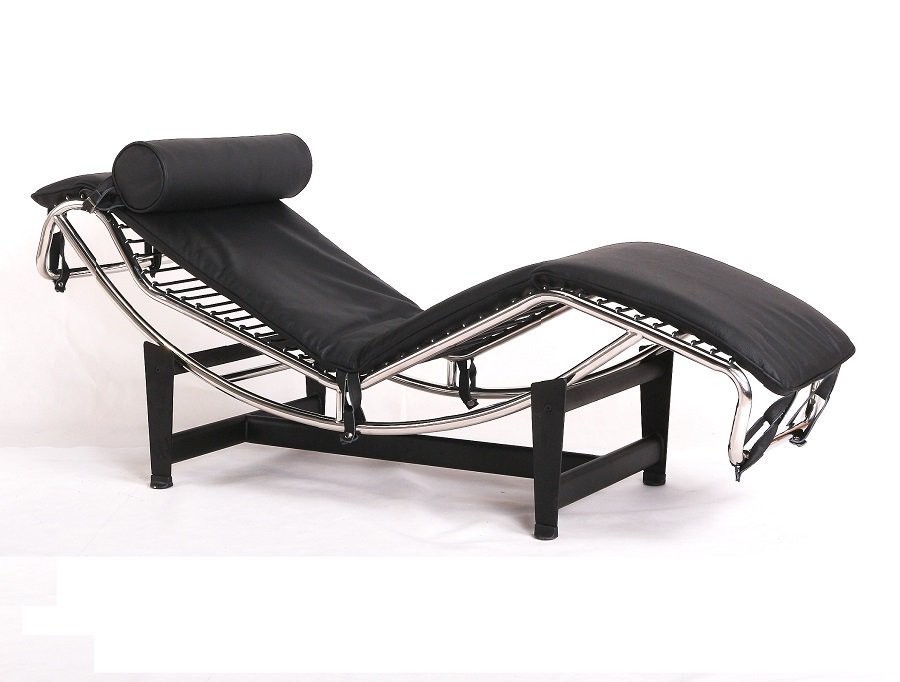
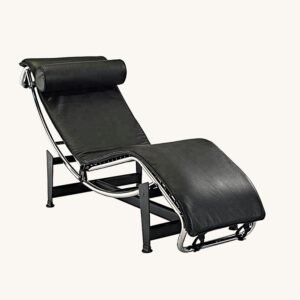
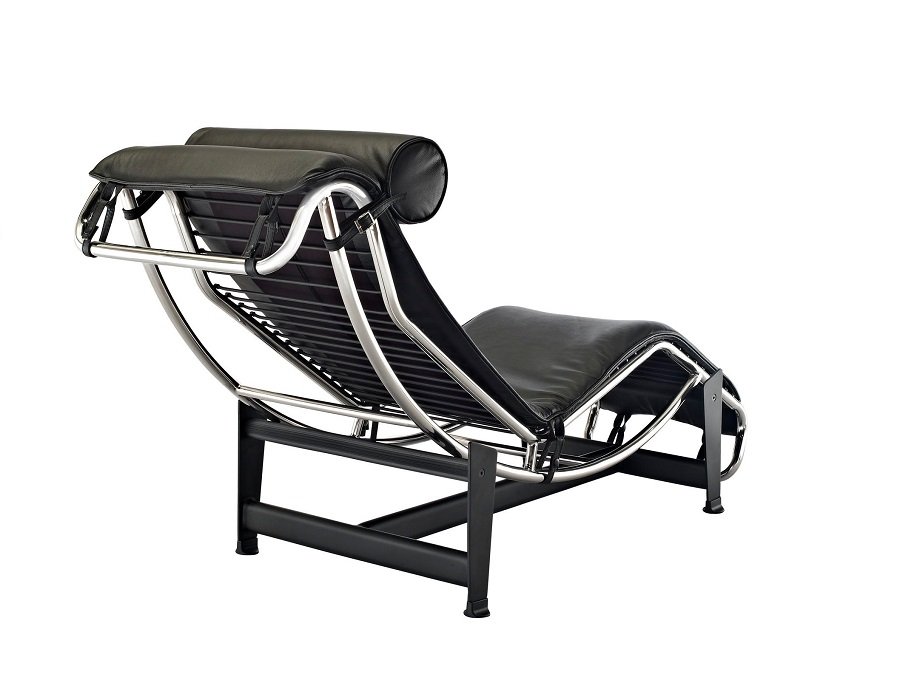
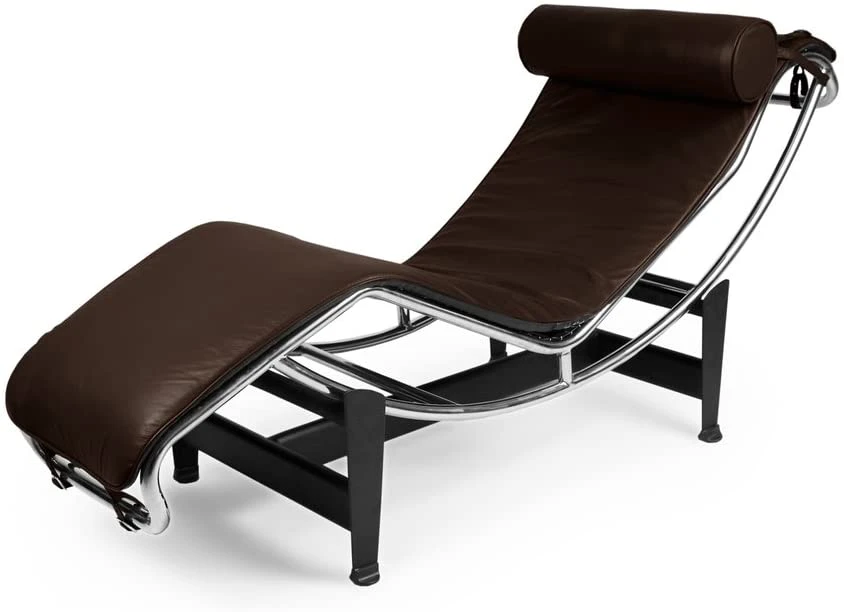
The design is deceptively clever. A semi-circular tubular steel cradle holds the padded mattress, and it simply rests on a separate H-shaped base. There is no mechanism: you slide the cradle along the base to any angle you like, from upright to almost flat, and friction holds it in place. The curve follows the body’s natural line, so the chaise supports you whether you sit up to read or lie back to sleep. It was a machine with one precise function – rest – and it did that job better than any padded lounger of its time.
Le Corbusier: The Architect Behind the Chaise
Le Corbusier was born Charles-Edouard Jeanneret in 1887 in La Chaux-de-Fonds, Switzerland, and became a French citizen in 1930. He adopted the name “Le Corbusier” around 1920, and went on to become one of the most influential architects of the twentieth century.
His ideas shaped modern building as much as modern furniture. He argued that “a house is a machine for living in”, set out his Five Points of Architecture, and designed landmarks including the Villa Savoye near Paris, the Unité d’Habitation in Marseille, the chapel at Ronchamp, and the city of Chandigarh in India. He began his Paris practice in 1922 with Pierre Jeanneret, the partnership that later produced the LC furniture. Le Corbusier died in 1965 while swimming off the French coast, leaving a body of work that still defines how we think about modern design.
From 1929 to Today: Cassina and the LC4
The LC4 made its public debut at the 1929 Salon d’Automne in Paris, shown on Le Corbusier’s stand devoted to the equipment of the home. Reactions were divided. The machine-like steel frame contradicted every convention of what beautiful furniture should look like, and many visitors rejected it, though the designers and critics who saw its potential were enthusiastic.
The chaise was prototyped by Charlotte Perriand and first produced by Thonet. Since 1965, the licensed original has been made by the Italian company Cassina, as part of its “I Maestri” collection of twentieth-century classics, and it remains in production today. Nearly a century after 1929, the design is still in demand, which is why so many people look for a faithful reproduction rather than the licensed original.
The LC4 and the Wider LC Collection
The LC4 was not a standalone piece. It was part of a series of tubular steel furniture the three designers created together, all now known by “LC” numbers after Le Corbusier and all made by Cassina.
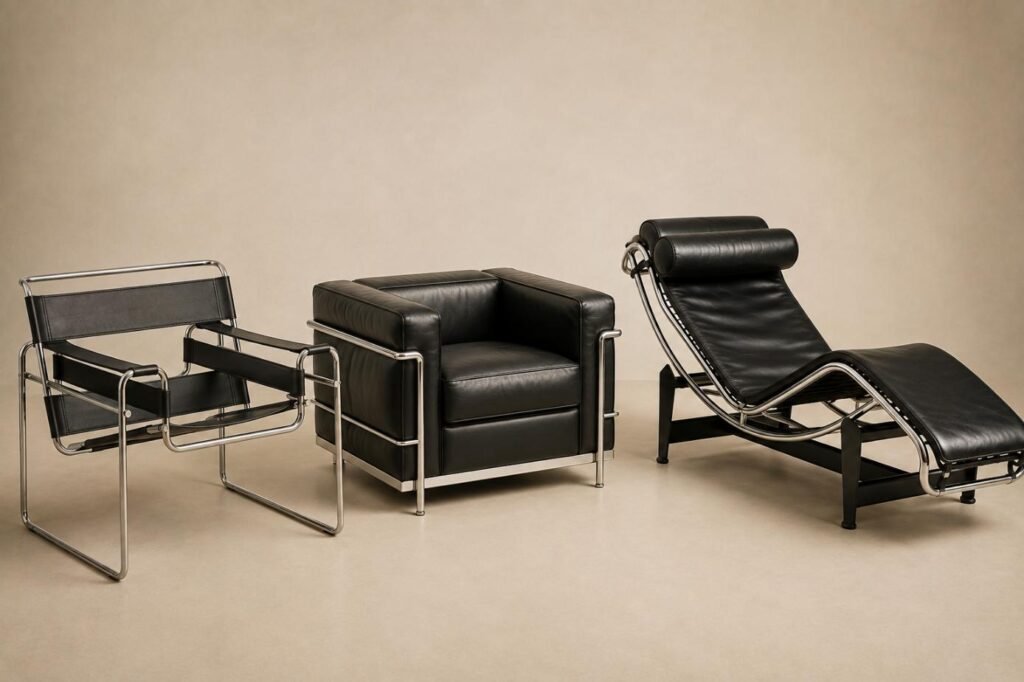
The best known alongside the chaise are the LC1, a light sling chair with a tilting leather back known as the “basculant”; the LC2 and LC3, the “Grand Confort” armchairs and sofa that set soft leather cushions inside an exposed steel cage; and the LC6, a dining table on a steel base. Together they applied one idea across a whole room: a clean steel structure holding comfort within it, with nothing added for show. The LC4 is the most sculptural of the group, but all of them share the same thinking about form, function, and the human body.
What Makes a Quality LC4 Reproduction
Because the LC4 looks simple, it is easy to build badly. A good reproduction gets the details right that a cheap one misses. The frame should be genuine tubular steel with a polished chrome finish, sitting on a separate, properly weighted black base, so the cradle slides smoothly and holds its angle by friction just like the original.
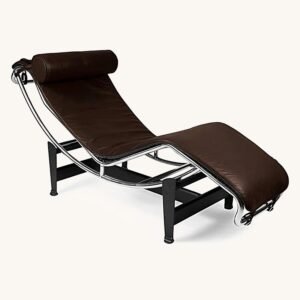
The mattress should be full-grain leather or hide over proper padding, with a matching leather headrest, rather than thin vinyl on a fixed frame. At Sederica, we build our chaise as an honest Le Corbusier-style reproduction – never as a genuine Cassina original – with the sliding frame and real leather that make the design work. Browse our LC4 chaise longue collection, including the chocolate brown and black options. For ideas on where to put it, see our guides to the LC4 in a Parisian apartment and where to place an LC4 chaise, and our designer chairs for more of the same era.
Frequently Asked Questions
When was the LC4 chaise designed?
The LC4 chaise longue was designed in 1928 by Le Corbusier, Pierre Jeanneret, and Charlotte Perriand, and first shown publicly at the 1929 Salon d’Automne in Paris. It was originally called the B306.
Who designed the LC4 chaise?
Three designers created it: Le Corbusier, his cousin Pierre Jeanneret, and Charlotte Perriand. Perriand, long overlooked, was central to the design and prototyped the chaise. Crediting all three is the accurate account.
Why is the LC4 called the relaxing machine?
Le Corbusier called it the “relaxing machine” because its curved frame is engineered to follow the body’s natural resting posture. He saw furniture as equipment for living, and the chaise was built around one function: comfortable rest.
Who makes the LC4 chaise today?
The licensed original has been made by the Italian company Cassina since 1965, as part of its “I Maestri” collection. Many companies also produce reproductions of the design at a fraction of the price.
Is it spelled LC4 chaise “lounge” or “longue”?
The correct French term is “chaise longue”, meaning long chair. “Chaise lounge” is a common English version that has become widely used. Both refer to the same piece – our spelling guide explains why.
Is the LC4 chaise comfortable?
Yes. The LC4’s curved frame follows the body’s natural resting line, and because the cradle slides on its base to any angle, you can set it upright for reading or almost flat for resting. That continuous adjustment is a large part of why the design has lasted.
How much does an LC4 chaise cost?
A licensed Cassina LC4 typically costs several thousand euros, depending on the leather and finish. A quality Le Corbusier-style reproduction offers the same sliding steel frame and leather comfort for a fraction of that price.
Bring the LC4 Design Home
The LC4 chaise is a piece of design history, and the licensed Cassina version is priced to match. Our Le Corbusier-style reproductions capture the same sliding steel frame and leather comfort for far less. Explore our LC4 chaise longue collection to see the finishes available.
Follow Sederica in Google
Add us as a preferred source and our buying guides will appear more often in your Google results.
Add as preferred source